Illegal mining has severely damaged rivers, forests, and farmlands. Ghana must enforce stringent environmental laws and ensure compliance through monitoring and penalties.
Notwithstanding the negative impacts of illegal mining, I think that it offers current generation a one-time opportunity to right the wrongs that have been perpetrated on our natural resources.
Let us not forget that today it may be land and water, tomorrow it will take another dimension. We need to ascertain why in spite of all the various environmental laws that we have as a country, this menace could still come on our dear nation. Could it be that as a nation we have not gotten our priorities right? Or it is just the case of lack of capacity to enforce the laws?
Enforcement of environmental laws should not be viewed in a different light. The appropriate way to look at it is to observe the general attitude of the nation and its citizens towards the laws of the country.
The same impunity with which people sometimes break the laws of the country, I believe is what has been carried on to this sector. This problem reminds us that as a nation, we have to do all that is within our powers to enforce the laws of the country. Instituting effective structures to ensure that our laws are really enforced, I believe is a legacy we can leave for posterity.
Let us not allow, and we can actually not afford to allow emerging and unborn generations to be caught up in a lawless nation. All hands should be on deck as we seek solutions to the current menace.
Local communities often suffer most from illegal mining but are also key to curbing it. Empowering communities to protect their environments and report illegal activities can make a significant difference. This challenge reminds us as a nation to value and continue to cherish stakeholder consultations, participation and involvement.
The communities where the illegal activities take place are key stakeholders who have to be listened to and involved. Fortunately for this nation, our governance structures already make provision for bottom-up approaches in decision-making. We need to activate this required approach to responding to the current problems that we face in our environment. Local communities will include all the formal and informal institutions that operate at this level.
Some schools of thought believe that illegal miners often operate due to a lack of access to legal avenues. By simplifying licensing and supporting small-scale miners with training and technology, they are of the opinion that Ghana can bring illegal miners into the formal economy.
This consideration is still being debated, whereas it is laudable, the sheer numbers of people involved in the illegal activities really calls for deep thinking or thoughtfulness about this option before it is considered. The lesson here is that we should explore how we can turn negative energies into positive ones to drive productivity rather than destroy the environment. This calls for detailed study of the phenomenon.
The socio-economic nuances must be unraveled to lead to evidence-based or data-informed decisions and actions.
The complicity of some local and state officials in protecting illegal miners shows that anti-corruption measures are vital to any solution. The suggestion that there are corrupt and powerful people involved in this illegal industry is widely believed to be so. Though the evidence is yet to be made available widely.
It is a clarion call that in whatever we do, we need to decisively and timely deal with any acts of corruption. Failure to do that will definitely spell doom for this country. Corruption, like a germ in the human body, if not attacked on time can breed more corruption. Decision-makers should have the courage and conviction to activate any disciplinary procedures against all culprits, irrespective of their status in society.
Many turn to illegal mining out of economic desperation. Investing in sustainable livelihoods—such as agriculture, tourism, and skills training—can reduce dependence on galamsey.
Providing sustainable alternatives, can be one of the ways of redirecting negatively deployed energy to a positive one.Illegal mining spans multiple sectors (mining, environment, water, law enforcement). Coordinated efforts across ministries and agencies are critical to success.
The burden of illegal mining is so huge that no single organization can bear the burden alone, we need to strengthen institutional collaborations and coordination. By enhancing the synergy of the efforts by the different institutions, we can collectively make a meaningful impact on addressing the problem of illegal mining. This lesson is key for natural resources management in the country, going solo will definitely not help, inter-institutional collaboration is indeed the key to success.
Crackdowns often start strong and then fade due to political pressure or change in leadership. Fighting illegal mining requires long-term commitment beyond political cycles. The support and commitment of different political constituencies cannot be overemphasized. I will call for a state-led approach to the illegal mining challenge.
If the state owns the fight, it does not matter who is in power, the fight will go on. We need a bi-partisan approach when it comes to natural resources management. Nonetheless, let me also emphasise that due to the financial dimension of dealing with natural resources management, one cannot completely sever politics from natural resources management. However, strong political will is required to take bold, beneficial, and decisive actions.
Using drones, satellite imagery, and data analytics can help detect illegal mining early and support more efficient law enforcement. The management of natural resources, must be enhanced through the acquisition and deployment of technology. Today, there are many technological tools that can be deployed when it comes to monitoring our natural resources.
These can be activated to monitor illegal mining activities as well as other natural resources.
Current mining and land use laws may not be sufficiently robust or enforceable. Revising them to address modern realities can strengthen Ghana’s ability to manage its resources. Perhaps it is time to carry out a comprehensive review of our mining laws. After many years of implementation, amidst the challenges we face today, there may be key lessons that have been learnt over the years and I believe that when these lessons are incorporated in the revised versions, it could help reduce the incidence of illegal mining.
Illegal mining has polluted many of Ghana’s rivers. There is a direct lesson about the importance of water protection policies and investment in clean water infrastructure. Water is indeed life and wherever there is water productive is sustained. This reiterates the need to prioritise water resources in our mining sector. This calls for various considerations before mining licenses are issued out to investors.
This calls for adopting a sustainability approach to natural resources management, where we ensure a good balance between the economic benefits, the impacts on society and the environment. We anticipate a situation where we obtain economic benefits with none or negligible environmental and social cost.
Many miners lack awareness of the environmental and health risks of galamsey. National education campaigns can shift public perception and behavior over time. The linkage between information and perceptions, attitudes, and behaviours are well established. This menace reminds us of the need to continuously empower society to take better decisions and formulate policies through the provision of authentic information.
Damaged ecosystems must be rehabilitated. Ghana needs comprehensive reclamation policies, including reforestation and soil restoration, with community involvement. Illegal mining is not only a Ghanaian problem. Cross-border collaboration with neighboring countries can help tackle illegal networks and improve resource governance. The media and NGOs have played a vital role in exposing illegal mining activities. Strengthening press freedom and civic space is crucial for transparency.
The galamsey issue highlights the need for a national strategy on mineral resources—balancing extraction with conservation, economic growth, and future generations’ needs. Thus, the lessons learnt in the illegal mining menace must be harnessed and leveraged in natural resources management in the country.
Meanwhile, here’s why Bright Simons has vowed to fight Ibrahim Mahama's GH¢10 million defamation lawsuit
Opinions of Sunday, 1 June 2025
Columnist: Dr Ernest Abraham Acting Dean, FMS- UPSA
Beyond The Illegal Mining Menace: Lessons for natural resources management in Ghana
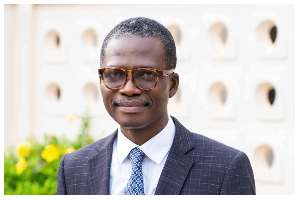 Dr Ernest Abraham Acting Dean, FMS- UPSA







Opinions