As Ghana begins a new year, moments of transition invite more than celebration; they demand reflection. Beyond the usual rhythms of political debate, the start of a new year offers an opportunity to reconsider how we discuss the policies that shape our collective future.
Few issues demand such sober reflection as education, particularly the Free Senior High School (Free SHS) policy.
As Ghana enters another year of democratic contestation and national reflection, the debate around education—particularly the Free SHS policy—continues to generate intense political emotions.
Yet, if we are honest with ourselves, much of this debate has remained trapped in slogans, counter-slogans, and partisan defensiveness. What is required at this moment is not louder noise, but more profound clarity.
Education policy, more than most public interventions, carries a moral burden. It is not merely about the numbers enrolled, the infrastructure completed, or the budgets allocated.
It is about the kind of society a nation seeks to build, the opportunities it creates for its young people, and the values it transmits across generations.
For this reason, the Free SHS policy deserves to be discussed not only as a political programme, but as a nation-building project.
The New Patriotic Party (NPP) made a bold moral claim when it implemented Free SHS: that the economic circumstances of their birth should limit no Ghanaian child’s future. This claim goes beyond electoral cycles.
It speaks to the long-standing Danquah–Busia–Dombo tradition that places human development, individual potential, and social mobility at the centre of national progress.
However, as with all ambitious reforms, access alone is not enough.
The real conversation Ghana must now confront—calmly and honestly—is the relationship between access, quality, and equity.
Expanding access was the urgent, necessary first step. But sustaining public confidence in the reform requires a more mature explanation of the challenges that inevitably accompany scale: infrastructure pressure, teacher deployment, learning conditions, discipline, and the relevance of educational outcomes.
Acknowledging these challenges is not an admission of failure. Instead, it is a sign of political seriousness.
Unfortunately, political communication around education has too often swung between two extremes. On one side, there is an uncritical celebration that leaves citizens feeling unheard.
On the other hand, there is relentless dismissal that ignores the social gains Free SHS has already delivered, particularly for students from rural and low-income households. Neither posture advances the national interest.
What is needed—especially from governing parties—is explanatory leadership.
Governing is not only about implementing policy; it is also about helping citizens understand trade-offs.
A policy that absorbs hundreds of thousands of additional students into the secondary education system will inevitably strain facilities that were never designed for such numbers.
The question, therefore, is not whether challenges exist, but whether there is a credible long-term strategy to address them—and whether that strategy is communicated honestly and with humility.
Education reform is cumulative. The benefits are rarely immediate, and the costs are often visible before the gains fully materialise. This is why serious political communication must resist the temptation to oversimplify complex realities. Citizens deserve more than talking points; they deserve context.
Beyond infrastructure and financing, there is also a deeper issue that deserves attention: the purpose of education itself. Education is not only about certification and employment, important as these are.
It is also about character formation, discipline, civic responsibility, and critical thinking in a democratic society. A system that expands access but neglects these foundational elements risks producing credentials without competence and schooling without social cohesion.
Here, again, the NPP’s ideological tradition offers valuable guidance. Education has always been understood within this tradition as a tool for self-reliance, national discipline, and responsible citizenship—not as a means of dependency. Communicating this philosophy clearly matters, especially at a time when public trust in institutions is fragile.
For the diaspora community, particularly those of us observing Ghana from abroad, the responsibility is even greater. Diaspora political communication must rise above emotional partisanship.
It must model restraint, evidence-based argument, and respect for dissenting views. When political debate becomes abusive or dismissive, it weakens the credibility of the very causes it seeks to defend.
The new year, therefore, presents not just another political season, but an opportunity to reset the tone of our national conversation on education.
If the Free SHS policy is to endure as a unifying national intervention rather than a perpetual partisan battleground, the tone of its defence must evolve.
This does not mean abandoning conviction; it means strengthening it with explanation. It means moving from reaction to reflection, from defence to direction.
Ultimately, the success of education reform will not be judged solely by enrolment figures, but by whether it produces young people who are skilled, disciplined, confident, and prepared to contribute meaningfully to Ghana’s development. That outcome requires patience, continuous reform, and above all, political honesty.
As the new year unfolds, Ghana’s education conversation must mature. Those entrusted with governance—and those who communicate on their behalf—must recognise that the moral burden of education policy cannot be carried with slogans alone. It demands clarity, humility, and a long view of the nation we are collectively building.
Author Bio
Michael Ampadu is a UK-based Ghanaian doctoral researcher in education policy, leadership, and equity. His work focuses on education reform, quality, and governance in Ghana, with particular attention to the social and moral dimensions of public policy. He is an active member of the Ghanaian diaspora and writes in his personal capacity.
Opinions of Thursday, 1 January 2026
Columnist: Michael Ampadu
Beyond Access: Education, opportunity, and the moral burden of governance
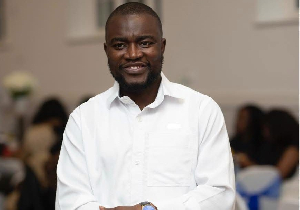 Michael Ampadu is a UK-based Ghanaian doctoral researcher