Reset the global order. That’s the call from African leaders at the 80th session of the UN General Assembly. The composition of the UN Security Council remains in 2025 as it was in 1945.
This, in the collective view of the African leaders, is anachronistic and an unjust relic of the post-World War two era; this must be revised to an order where Africa gets at least two permanent seats on the Security Council.
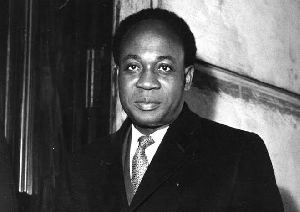
It is instructive to note that this advocacy isn’t new, but an encore of the voices of former African leaders like Kwame Nkrumah of Ghana, Kenneth Kaunda of Zambia, and Julius Nyerere of Tanzania, who “waged the arduous struggle against colonialism, endured economic hardships, and made personal sacrifices to win independence for their respective countries.” What’s important is that these past leaders laid the development foundation for these present leaders to imagine an Africa beyond colonialism and historical injustice, and to articulate so on the world’s stage.
However, the current crisis in Africa, home to the leaders calling for a change in the global order, is their lack of political will to change the local order.
According to the latest Sustainable Development Report, African countries continue to face significant challenges across nearly all goals. Sub-Saharan Africa as a region faces major challenges, actually scored the lowest rating, in achieving SDG 1 (No poverty), SDG 3 (Good Health and Wellbeing), SDG 4 (Quality Education), SDG 6 (Clean Water and Sanitation), SDG 7 (Affordable and Clean Energy), SDG 9 (Industry, Innovation and Infrastructure), SDG 16 (Peace, Justice and Strong Institutions).
The specific manifestations of these hurdles range from the growing (and worrying) appeal of fascism and dictatorship across the region, reversals in health milestones, environmental terrorism (galamsey), to a spike in multidimensional poverty.
While reforms in the global financial system and favorable lending terms from the Bretton Woods institutions (World Bank and IMF) will offer African countries the means to invest in critical sectors of the economy for growth and development, radical reforms to ensure and sustain good governance must not be overlooked.
The absence of USAID hurts, but it also presents an opportunity for regional institutions like the African Development Bank (AfDB) to broaden its scope and fill this crucial development gap. The AfDB is well-positioned for this, having the necessary capacity, goodwill, and a proven track record.
For instance, the bank's 2018 disbursement of $6.6 billion for its "High 5 Goals" (Light-up and Power Africa, Feed Africa, Industrialize Africa, Integrate Africa, and Improve the Quality of Life for Africans) was comparable to the World Bank's $8.9 billion allocation to the continent that same year.
Nevertheless, a major challenge is that the AfDB’s capital base is insufficient to cover the continent’s investment needs, which include an annual infrastructure funding gap estimated at $60-$130 billion.
By expanding its mandate to include combating corruption and illicit financial flows (which drain tens of billions from Africa annually and exceed its foreign aid receipts), the bank can help raise the funds to meet more of the infrastructure demand.
These measures will ensure transparency, government efficiency, and free up scarce resources to invest in the future of the world; the 60% young Africans under 25, and give impetus to the much-touted global dividend.
Watch the latest Health Focus on PCOS below
Opinions of Monday, 29 September 2025
Columnist: Ernest Armah
African leaders, please do your homework
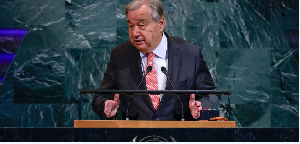 Antonio Guterres is the UN Secretary General