Background In 2013, Ghana commissioned its first utility-scale solar power plant in Navrongo, Upper East Region.
The 2.5 MW project, financed and owned by the Volta River Authority (VRA), marked a milestone in the country’s renewable energy agenda. Over a decade later, however, the host community of Pungu has seen minimal socio-economic benefits despite providing 57 acres of land (7 acres free) for the project.
In July 2025, ACEES engaged the Pungu Community, civil society organizations (CSOs), government agencies, and other stakeholders under the theme ‘Reflecting on 10+ Years of Solar Power in Navrongo: Advancing a Just Energy Transition.’ The engagement revealed significant gaps in community involvement, unfulfilled promises, and a lack of integration of socio-economic benefits into renewable energy projects.
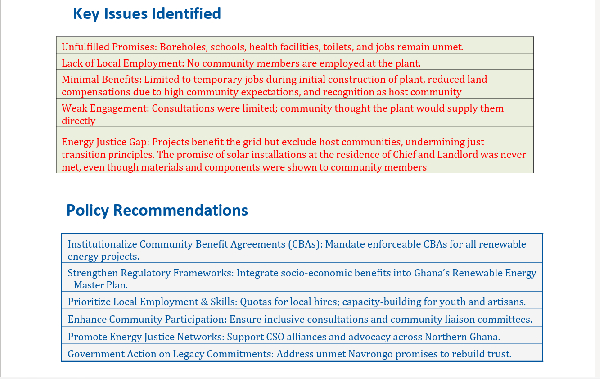
Key Issues Identified
Implications for Ghana’s Just Energy Transition
Equity: Renewable energy projects must ensure fairness and inclusivity.
Trust: Credibility with communities is key for sustainability.
Climate Social Nexus: Linking livelihoods enhances resilience.
Replication: Lessons from Navrongo should guide future renewable projects.
Conclusion
The Navrongo Solar Power Plant marked the beginning of Ghana’s ability to deploy utility-scale solar but its failure to deliver equitable benefits risks undermining public trust.
ACEES calls for stronger policies, inclusive planning, and enforceable community benefit frameworks to ensure that Ghana’s energy transition is not only green but also just.
Opinions of Tuesday, 12 May 2026
Columnist: Nurideen Abdulai
Advancing a Just Energy Transition in Ghana: Lessons from10+ years of solar power in Navrongo
 Nurideen Abdulai is the author of this article