Opinions of Monday, 30 March 2026
Columnist: Osei Kwaku
Accra is growing — but rural Ghana is paying the price

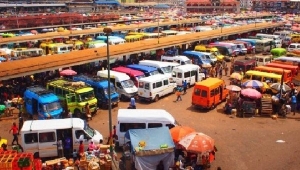
Ghana’s economic recovery is back on track—at least on paper. Growth has stabilized, inflation has eased from its 2023 peak, and confidence is slowly returning to the economy. In Accra, construction continues, businesses are expanding, and the signs of progress are visible.
But step outside the major cities, and a different reality emerges. In rural Ghana—from the Northern regions to farming communities around Kumasi—economic recovery feels distant. For millions, daily life has not improved in any meaningful way. If anything, it has become more uncertain.
This raises a difficult but necessary question: who is Ghana’s economic growth really for?
As of 2026, more than one in five Ghanaians still live below the poverty line, with the overwhelming majority in rural areas. These are not just statistics—they represent households that continue to struggle with access to food, healthcare, clean water, and stable incomes.
While inflation has declined from the over 40% peak recorded in 2023, the cost of living remains high. Food prices, in particular, continue to strain rural families whose incomes are already low and unpredictable.
Yet, despite these realities, national conversations about economic recovery often overlook the rural majority. Agriculture—frequently described as the backbone of Ghana’s economy—tells the clearest story of this disconnect.
The sector employs about one-third of the workforce, with smallholder farmers producing nearly 80% of the country’s food. But this backbone is under pressure.
Across rural communities, farmers still rely on basic tools, limited fertilizer use, and little access to mechanization. Promises of modernization have not translated into widespread change. Access to credit remains difficult, and extension services are inconsistent.
The result is a system where those who feed the nation are among the most economically vulnerable. At the same time, climate change is intensifying these challenges. With around 90% of farming dependent on rainfall, unpredictable weather patterns are already disrupting planting seasons.
Erratic rainfall, longer dry spells, and periodic flooding are reducing yields and increasing uncertainty. For many farmers, each season now carries greater risk than the last.
And yet, climate adaptation remains underfunded and unevenly implemented.
There is also a structural issue that continues to receive insufficient attention: gender inequality.
Women play a central role in agriculture and rural economies, but they remain disproportionately excluded from land ownership, financial resources, and decision-making processes. In many communities, they do much of the work but have limited control over the benefits.
This is not just a social issue—it is an economic one. Ghana cannot achieve inclusive growth while systematically limiting the productivity of a significant portion of its population.
The deeper problem is not that Ghana lacks policies. It is that implementation often falls short, especially where it matters most.
Rural development is frequently discussed, but investment remains concentrated in urban areas. Agriculture is prioritized in rhetoric, but underfunded in practice. Climate resilience is acknowledged, but not scaled to match the urgency of the threat.
If this continues, the gap between urban prosperity and rural hardship will only widen. Ghana’s economic recovery should not be judged solely by macroeconomic indicators or the pace of urban development. It should be measured by whether rural households can afford food, access basic services, and build stable livelihoods.
Right now, that standard is not being met.
Growth that does not reach the majority is not sustainable. It risks deepening inequality, weakening social cohesion, and undermining long-term development.
The challenge for Ghana in 2026 is no longer just to grow—but to grow fairly.
Because until rural communities feel the impact of economic progress, the country’s recovery will remain incomplete.



Entertainment