We gather to evaluate a life that defied not merely convention but the very calculus of power in postcolonial Africa.
Nana Konadu Agyeman Rawlings—First Lady, institutional architect, political strategist—has concluded her engagement with history, leaving behind a legacy that demands analysis rather than sentiment, assessment rather than hagiography.
She was born into privilege—the daughter of a prominent Ashanti family—and she wielded that privilege with the grace of someone who understood that elegance itself could be an instrument of power.
Nana Konadu possessed that rare combination of refined aesthetics and political acuity.
She moved through Ghana’s corridors of power with a dignity that commanded attention, dressed not merely for social occasions but as a deliberate statement that African women could embody sophistication on their own terms, without mimicking.
Western templates.
Her elegance was never merely decorative.
It was strategic. She understood what many political actors fail to grasp: that presentation shapes perception, that a woman who carries herself with dignity and style forces observers to recalibrate their assumptions about capability and seriousness.
Where traditional analysis saw constraints, she perceived opportunities for strategic repositioning through the cultivation of an image that was simultaneously traditional and modern, African and cosmopolitan, accessible and aspirational.
When she married Flight Lieutenant Jerry John Rawlings in 1977, she brought to the union not merely her own considerable intellect but a sense of style that would come to define Ghana’s First Ladyship.
The marriage proved to be less a romantic union than a strategic alliance—though the two are not necessarily incompatible.
She elevated the role through sheer force of presence: immaculately dressed, impeccably composed, speaking with the cultivated diction of someone educated in the finest traditions yet grounded in Ghanaian reality.
Where her husband represented revolutionary fervour and military directness, she embodied refined determination.
She could attend a state function in Kente cloth that had been tailored to perfection, every fold deliberate, every accessory chosen with the precision of a general selecting weapons.
She understood that for a woman in African politics, elegance was not
frivolity—it was armour, it was credibility, it was the visual manifestation of the argument that women could wield power without sacrificing femininity.
Her principal achievement—the 31st December Women’s Movement—represented
something that weak observers mistook for charity but which, upon closer analysis, is revealed as strategic infrastructure development.
The Movement was a declaration that Ghana’s transformation could not be complete without fundamentally altering the position of half its population.
That economic development meant nothing if it failed to reach market women, rural farmers, young mothers—the very constituencies that determine political stability in developing societies.
Through the Movement, she established day-care centres that enabled women’s economic participation.
She created skills training programs that converted potential into productivity. She built networks of support that transformed individual capability into collective power.
This was not benevolence—though benevolent outcomes resulted.
This was the patient construction of parallel power structures, the methodical work of creating institutional facts on the ground.
Her critics—and in politics, criticism is merely evidence of consequence—accused her of instrumentalising the Movement for political purposes, of conflating state resources with personal ambition.
Perhaps, but show me the historical figure who successfully navigated the turbulent waters of 1980s and 1990s Ghana politics without occasionally blurring such lines.
Power, as I have observed throughout my career, is never exercised in conditions of moral clarity.
The relevant question is not whether compromises were made, but whether the
outcomes justified the methods.
Consider the empirical evidence: she built institutions that outlasted her husband’s presidency by decades.
The day-care centres continue operating.
The training programs continue producing results.
The networks continue functioning.
In statecraft, as in life, durability is the ultimate measure of success.
After her husband departed from office in 2001, conventional analysis predicted Nana Konadu would accept the dignified retirement of the elder stateswoman.
Conventional analysis proved, as it so often does, inadequate to the complexities of individual ambition interacting with institutional opportunity.
In 2011, she challenged President John Atta Mills for the NDC presidential nomination—an act that shocked observers who had failed to understand that she had never viewed herself as derivative of her husband’s power but as a political actor with independent standing.
Some characterised this as ambition.
Others termed it betrayal.
She framed it as a principle.
All three assessments contain elements of truth, and none fully captures the strategic calculation involved.
When the party apparatus rejected her candidacy, she executed what military strategists would recognise as a tactical withdrawal followed by a flanking manoeuvre.
She formed the National Democratic Party and contested the presidency in 2012 and 2016.
She did not prevail—the structural factors determining electoral outcomes in Ghana’s political system worked against her.
But electoral victory, while preferable, was not the only strategic objective.
By running, she expanded the boundaries of political possibility for women in Ghana.
She demonstrated that a woman could move beyond the supporting role to claim the
principal position.
She established a precedent that future candidates would leverage.
In international relations, we call this shaping the strategic environment.
She may not have won the specific engagement, but she altered the terrain on which future battles would be fought.
Let us engage in clear-eyed assessment, as she would have demanded.
Nana Konadu Agyeman Rawlings was not without flaws—and the expectation of flawlessness is itself a form of analytical weakness.
She could be imperious, where collaboration might have served better.
She could be confrontational, whereas e diplomatic approach might have yielded superior outcomes.
She accumulated wealth in ways that invited scrutiny regarding the intersection of public service and private accumulation—questions that remain unresolved.
She defended her husband with a loyalty that sometimes required a selective interpretation of the PNDC’s early years, when revolutionary justice and extrajudicial violence were difficult to distinguish.
She stood beside him as he evolved from revolutionary insurgent to establishment incumbent, from destroyer of the old order to maintainer of a new one.
But these contradictions do not invalidate her achievements—they contextualise them.
In my own career, I learned that leadership exercised under conditions of uncertainty and constraint inevitably produces outcomes that resist simple moral categorisation.
The relevant question is not whether mistakes were made—mistakes are the inevitable byproduct of consequential action—but whether the historical ledger balances positively.
For Nana Konadu Agyeman Rawlings, I would argue that it does.
Across Ghana today, empirical evidence of her impact is measurable.
Women operate businesses because they created the training infrastructure.
Women hold political office because she demonstrated viability.
Women raise children with enhanced dignity because they have built the institutional support systems.
There exist daughters—now professionals, entrepreneurs, political actors—who developed their sense of possibility by observing a First Lady who refused decorative limitation, who claimed substantive space, who demanded serious engagement.
These women do not request permission; they assert authority.
This represents her most durable achievement: not the institutions she built, though those matter, but the transformation of expectation regarding what women could legitimately aspire to accomplish.
In the language of social science, she altered the dependent variable.
Classical political theory distinguishes between individual ambition and collective transformation, but Nana Konadu understood what pure individualists systematically miss: that in postcolonial societies with Ghana’s structural characteristics, individual advancement divorced from broader institutional reform proves ultimately unsustainable.
Elite status divorced from mass empowerment creates not stability but fragility.
Her approach represented d sophisticated understanding of what we might call interdependent power dynamics.
Her own position remained vulnerable so long as the broader population of women remained systematically constrained by poverty, traditional hierarchies, and patriarchal institutional arrangements.
This was not altruism—though altruistic outcomes resulted—but rather clear-eyed recognition of how power actually functions in developing societies.
She was not invariably gracious in executing this strategy.
Grace, however, is not a prerequisite for historical significance.
She demonstrated commitment.
And commitment, sustained over decades despite opposition and reversal, constitutes its own form of strategic achievement.
Nana Konadu Agyeman Rawlings lived according to strategic principles that rejected conventional limitations.
She did not await permission to act.
She did not apologize for ambition.
She did not reduce herself to accommodate others’ comfort levels.
In a global context where women continue facing systematic pressure to diminish their aspirations, this represents more than personal choice—it constitutes a political statement.
She has departed, but the questions she raised persist: What constitutes genuine liberation?
Who determines the boundaries of acceptable ambition?
How do societies construct Inclusive development rather than development that reinforces existing hierarchies?
These are uncomfortable questions.
They were designed to be.
The work she initiated continues—not because of sentiment, but because the structural conditions that necessitated her interventions have not been fully resolved.
The institutions she built continue serving their populations.
The precedents she established continue to influence political calculations.
The expectations she elevated continue shaping what young women believe is possible.
This is how historical significance is measured: not by perfection of execution but by durability of impact, not by absence of criticism but by persistence of influence, not by universal approval but by irreversible change to the landscape of possibility.
Nana Konadu Agyeman Rawlings altered that landscape.
Ghana—and particularly Ghana’s women—operate today in a different strategic environment because of their interventions.
The day-care centres function.
The training programs continue.
The political space has expanded.
The expectations have elevated.
In statecraft, we call this legacy.
She joins now the continuum of consequential figures—not flawless, not universally beloved, but undeniably significant.
Yaa Asantewaa would recognise the strategic deployment of limited resources against a superior force.
Kwame Nkrumah would acknowledge the institutional innovation.
Ghana will remember the First Lady.
But history—which judges not by contemporary opinion but by durable impact—will record something more precise: a political actor who refused assigned limitations and, in that refusal, expanded the operational space where all women could legitimately function.
This is not hagiography.
This is an assessment.
And the assessment, examined through the analytical framework that evaluates historical figures by their structural impact rather than their personal characteristics, yields a clear conclusion: Nana Konadu Agyeman Rawlings was a consequential force in Ghana’s post-independence development, particularly regarding the political and economic positioning of women.
She altered the trajectory.
The trajectory remains altered.
In political analysis, this constitutes success.
Da yie, Nana Konadu.
The institutions endure.
The precedents persist.
The work continues.
Opinions of Monday, 27 October 2025
Columnist: Vincent Djokoto
A meditation on the life of Nana Konadu Agyeman-Rawlings
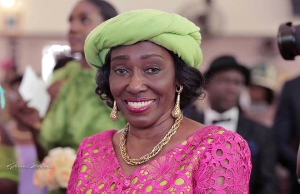 The late Nana Konadu Agyeman Rawlings was the wife of the late Jerry John Rawlings





Entertainment