In the ever-busy corridors of Ghanaian hospitals, vancomycin is a silent workhorse. Known for its potent action against drug-resistant bacterial infections, especially methicillin-resistant Staphylococcus aureus (MRSA), vancomycin is often the last line of defense.
However, new pioneering research by Dr. Emeka Stanley Obi has brought to light an under-recognised, potentially life-threatening complication: vancomycin-induced immune thrombocytopenia (VIIT)—a novel revelation not previously documented in our clinical discourse.
This first-of-its-kind report, highlighting a rare immune-mediated drop in platelet count triggered by vancomycin, has never been robustly examined in our sub-Saharan setting.
Dr. Obi’s meticulous documentation of a 56-year-old diabetic patient who developed severe thrombocytopenia following vancomycin use offers unprecedented insight into a serious yet overlooked adverse drug reaction.
Notably, the patient's platelet count plummeted shortly after administration of the antibiotic, only to normalize after the drug was withdrawn. Laboratory confirmation of drug-induced platelet antibodies sealed the diagnosis—marking a pioneering clinical milestone.
Why this research matters for Ghana’s public health landscape is both timely and urgent. While vancomycin is commonly administered in tertiary facilities across Accra, Kumasi, and beyond, awareness of VIIT is virtually nonexistent in our routine medical curriculum and pharmacovigilance practices. The novelty of Dr. Obi’s findings lies not only in documenting a rare event but in alerting clinicians across Africa to a condition that may be masquerading under the radar—misdiagnosed as autoimmune thrombocytopenia, viral infection, or even drug-induced bone marrow suppression.
This research sets the stage for a paradigm shift in how we manage patients on vancomycin, especially those with complex comorbidities such as diabetes, hypertension, or sepsis. In the documented case, the patient had a diabetic foot ulcer—an increasingly common complication in Ghana's diabetic population.
The revelation that vancomycin, a standard empiric antibiotic for such infections, could induce severe platelet depletion without classical bleeding signs introduces a new dimension of diagnostic caution. Previously, this link was speculative at best in African contexts.
Now, we have local relevance and proof.
Importantly, Dr. Obi’s research is pioneering in that it provides an evidence-based call for routine monitoring of platelet counts in patients receiving vancomycin, particularly by day 3 to 5 of therapy. Ghana’s clinical protocols have not previously included this guidance. Moreover, the presence of petechiae—small, pinpoint skin hemorrhages—as seen in the patient, is often dismissed as a skin irritation or diabetic dermopathy.
This research urges a shift: clinicians must now view such skin signs through the lens of emerging hematological complications, thanks to this novel evidence.
From a policy standpoint, this is the first formal recommendation in our region advocating for the inclusion of VIIT risk in Ghana’s Essential Medicines clinical advisory documents. With Ghana investing in antimicrobial stewardship programs through the Ministry of Health and the Ghana Health Service, Dr. Obi’s work offers a pioneering addition to our national treatment safety framework. Pharmacists, prescribers, and lab professionals must now work in concert to detect early signs of thrombocytopenia before it spirals into critical bleeding or misdiagnosis.
Furthermore, the implications stretch into medical education. For decades, vancomycin’s adverse effects in Ghanaian medical training were limited to nephrotoxicity and ototoxicity. This research expands the spectrum—introducing for the first time in sub-Saharan literature a clinically confirmed case of vancomycin-induced immune thrombocytopenia, thus warranting updates in medical textbooks and pharmacology lectures in Ghana’s universities and nursing colleges.
Dr. Obi’s study also exposes another critical gap: the limited access to diagnostic tools such as flow cytometry, which confirmed the presence of drug-dependent platelet antibodies in the patient. This novel diagnostic approach is rare in Ghanaian settings, yet this case underscores its transformative value. It is a clarion call for equipping our national and teaching hospitals with more advanced hematological testing capabilities to identify such rare, drug-related complications with accuracy and timeliness.
Another pioneering dimension of this work is how it integrates pharmacovigilance with bedside decision-making. The authors did not just observe a platelet drop—they linked it temporally to vancomycin initiation, ruled out other causes (including autoimmune and infectious etiologies), confirmed the antibody response, and most crucially, demonstrated platelet recovery upon drug withdrawal.
This sequence sets a new gold standard for causality assessment in adverse drug reactions within clinical medicine in Ghana and beyond.
Finally, the ripple effect of this discovery cannot be overstated. In a region where empiric therapy is commonplace due to diagnostic limitations, this research forces clinicians to rethink their thresholds for continuing or escalating vancomycin therapy when unexplained lab changes arise. For the first time, Ghanaian healthcare providers are equipped with context-relevant guidance on how to suspect, evaluate, and manage this rare but severe complication.
In conclusion, Dr. Emeka Stanley Obi’s trailblazing work breaks new ground not only in internal medicine and hematology but also in pharmacology, diagnostics, and public health safety. Ghana must heed this warning. Whether through updated treatment guidelines, routine platelet monitoring, or enhanced clinician training, the time has come to bring VIIT into our national clinical consciousness. The cost of ignoring this novel risk is simply too high. This research is not just informative—it is transformative. Let Ghana lead Africa in turning this first-of-its-kind knowledge into lifesaving action.
Opinions of Saturday, 23 December 2023
Columnist: Fritz Delanyo Amegashie, Broadcast Journalist
A Medical Wake-Up Call: Ghana must heed this groundbreaking research on a rare vancomycin risk
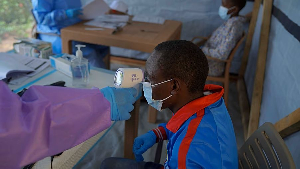
 File Photo






Entertainment