Ghana's national anthem underwent a major change in 1960 when President Kwame Nkrumah's government invited citizens to submit new lyrics to reflect the country's transition from a British Dominion to a republic.
On November 25, 1960, the Ministry of Information and Broadcasting advertised a national competition for new words to accompany the existing anthem music, giving Ghanaians an opportunity to contribute to the country's evolving national identity.
The invitation came four months after Ghana became a republic on July 1, 1960, with Nkrumah assuming the position of executive president.
The government set specific conditions for submissions, insisting that the proposed lyrics should be dignified, simple and easy to sing. Entries were also required to contain no more than three verses and express the patriotic sentiments of citizens of the Republic of Ghana.
According to historical records, submissions had to be written in English to fit the existing anthem music, although translations into major Ghanaian languages could be considered later. The competition also carried a prize of 100 guineas.
The exercise was part of efforts to give the country's national anthem words that reflected its new republican status and political aspirations.
Ghana's anthem had already undergone changes following independence on March 6, 1957. The original music was composed by Ghanaian musician and educator Philip Gbeho, while the initial lyrics were associated with Emmanuel Pappoe-Thompson, with contributions from Tettey Lartey.
However, following the declaration of the republic in 1960, the government sought another version, leading to the competition that produced the lyrics titled Hail the Name of Ghana.
The changes did not end there. Following the overthrow of Nkrumah's government in February 1966, another revision was made to the national anthem.
Ghana eventually returned to the familiar God Bless Our Homeland Ghana lyrics, which remain a central part of the country's national identity.
The November 25, 1960 invitation therefore represents an important chapter in Ghana's history, demonstrating how the country's political transformation also influenced its national symbols.
EA
Entertainment of Wednesday, 25 November 2026
Source: www.ghanaweb.com
Today in History: Nkrumah's government invites Ghanaians to rewrite national anthem
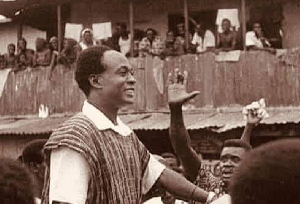 A picture of Dr Kwame Nkrumah