Creative arts stakeholders in the Volta Region have called on the government to complete the abandoned Centre for National Culture project in Ho to provide a dedicated space for talent development and the promotion of the region’s creative industry.
Founder of the Volta Creative Arts Foundation, Samuel Etormam Kwasi Lavoe, said the absence of suitable venues is limiting the ability of creatives to showcase their talents and organise major events in the region.
He appealed to the Ministry of Tourism, Arts and Culture and relevant creative arts agencies to prioritise the completion of the facility, which has remained unfinished for years.
“Volta has people with diverse talents, but we lack proper venues to host our events. The only spaces where you can organise proper events are school auditoriums, which you have to pay huge amounts of money to use,” he said.
Lavoe also called for the establishment of national studios, preferably in the regional capital, to support emerging musicians and other creatives who cannot afford commercial studio services.
He said such facilities would provide opportunities for young artists to record their works, learn to play musical instruments and acquire practical skills to improve their craft.
“The future needs to be protected and trained. If we do not train our people on what to do going forward, we are going to lose everything,” he stressed.
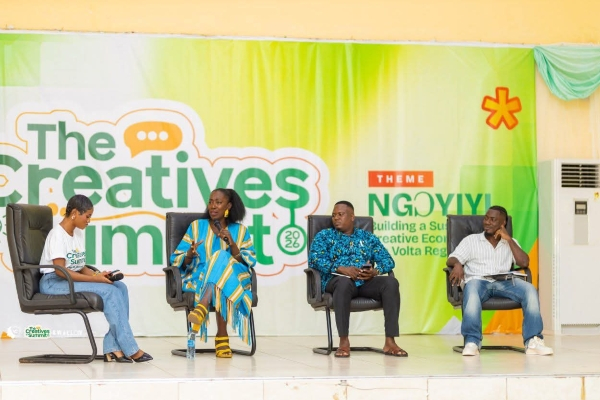
Lavoe appealed at 'The Creative Summit', organised by the Foundation under the theme, “Ŋgɔyiyi, Creating a Sustainable Creative Economy in the Volta Region.”
He said the Foundation was established to nurture talent, develop creative abilities and build a sustainable future for people in the creative industry.
According to him, although the region has a lot of potential in arts, crafts, poetry, music and ecotourism, many creatives lack the business knowledge needed to turn their talents into sustainable sources of income.
He said the summit was designed to educate participants on how to maximise the economic benefits of their creative works, while providing opportunities for networking and collaboration.
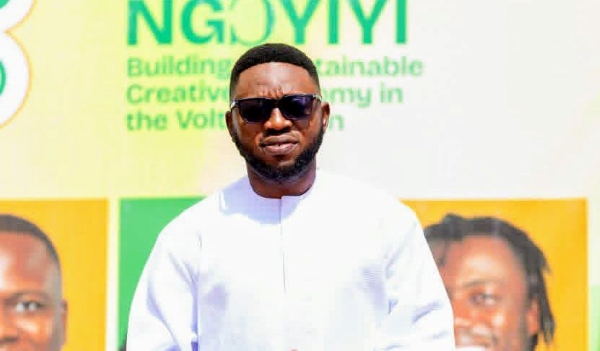
Lavoe said the programme therefore brought together business experts and other resource persons to help creatives understand how to develop, package and commercialise their talents.
He disclosed that the Foundation would introduce Creatives Festival next year to provide more opportunities for talented individuals across the region.
The festival, he explained, would be decentralised, with activities expected to take place in communities like Ho, Sogakope, Aflao and Kpando.
He said the initiative would help identify and promote talents in communities where young creatives lack platforms to exhibit their abilities.
Lavoe also highlighted the Foundation’s commitment to nurturing young talents, noting that about 60 students from senior high schools, including Mawuli School, Mawuko Girls, Ola, HTU and Sokode and other institutions, participated in the summit to learn from the panellists.
He appealed to individuals, corporate organisations and other stakeholders to support the Foundation, saying its activities were largely self-funded.
He urged well-to-do individuals in the region to invest in the creative industry, arguing that the sector had the potential to contribute significantly to the region’s development.
Beyond its creative arts activities, Mr Lavoe said the Foundation is also supporting vulnerable groups, including persons who are deaf and blind, and providing educational assistance to students willing to pursue their interests.
He cited ongoing renovation works at the Hohoe School for the Deaf and Blind, where the Foundation has renovated, painted and replaced window nets for classroom blocks and dormitories as part of efforts to improve the learning environment.
He said additional work remained to be completed at the school, reaffirming the Foundation’s commitment to supporting disadvantaged communities alongside its talent development agenda.
Entertainment of Monday, 23 November 2026
Source: Desmond Tinana
Volta creatives call for completion of Centre for National Culture
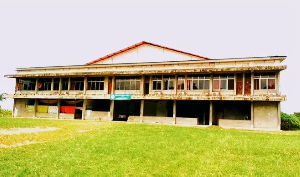 Image of uncompleted Centre for National Culture Building in Ho.