For years, Corporate Social Responsibility (CSR) in the health sector has been anchored by a predictable, uninspiring formula: a press release, a temporary logo change, and a few sponsored social media posts.
However, modern audiences are fiercely attuned to performative marketing. They no longer respond to top-down corporate messaging, especially when it comes to critical issues like public health. To drive actual behavioral change, advocacy must evolve from a sterile corporate obligation into a living, breathing cultural movement.
On October 31st, a groundbreaking initiative in Ghana demonstrated exactly how to execute this pivot. It proved that when you stop treating healthcare as a solemn mandate and start treating it as a community celebration, the results are unprecedented.
Mobilizing at Scale: The Pink Ride Partnership
Spearheaded by EchoHouse’s all-women internal community, the She Unit, in strategic partnership with travel and experiential experts Into The Unknown, "The Pink Ride" completely reimagined the breast cancer awareness campaign.
Rather than inviting women to a quiet hospital ward, the organizers brought the clinic to the community via the longest convoy of its kind.
On that Saturday morning, a massive fleet of approximately 200 vehicles departed Accra, taking over the highway to Akropong. By turning the journey itself into a highly visible, shared experience, the organizers immediately stripped away the isolation traditionally associated with medical screenings.
This sheer scale of logistical coordination between the She Unit and Into The Unknown facilitated a monumental health victory: by the end of the day, medical volunteers successfully provided professional breast screenings for more than 1,000 women and senior high school girls.
Merging Preventative Health with Youth Culture
The true genius of The Pink Ride lay in its integration with youth culture. If you want to engage high school students and young adults in preventative health, you must meet them in environments where they already feel safe and energized.
Some of the students who attended The Pink Ride
The Pink Ride did this by anchoring their screening efforts around vibrant inter-school dance competitions, heavily featuring institutions like Benkum Senior High School and the School for the Deaf in Mampong-Akuapem.
By positioning breast cancer screenings adjacent to the music, laughter, and high-energy dance battles that define Ghanaian youth culture, the initiative normalized preventative care. It reframed a potentially terrifying medical exam into an empowering, collective experience.
The Organic Digital Impact: A Lesson for Marketers
When a campaign is authentically rooted in community and culture, brands no longer have to buy their digital reach, the community builds it for them.
The digital footprint of The Pink Ride is a masterclass in organic amplification. Over the course of the campaign, the initiative reached 2.4 million people and generated 153,800 engagements, boasting a 90% positive sentiment score and absolutely zero negative mentions.
A happy moment at The Pink Ride
Remarkably, the heaviest digital lifting did not come from brand-owned channels or paid corporate rosters. It was driven by independent platforms and creators who were genuinely captivated by the event. They showcased the unfiltered joy of the students, organically weaving the underlying health message into mainstream digital culture.
Beyond October: Setting a New Standard
While the convoy and the dance battles created a massive localized impact, the most vital takeaway from The Pink Ride is how it poses the ultimate challenge for brands, agencies, and public health organizations worldwide. The Pink Ride has effectively rendered the traditional, one-month flyer campaign obsolete.
A section of the convoy at The Pink Ride
By utilizing a 200-vehicle convoy, partnering with experiential experts like Into The Unknown, and placing screenings in the middle of high school dance floors, this initiative created a new blueprint for advocacy.
It is a resounding call to action: drop the standard advertising playbooks, invest in genuine cultural infrastructure, and build public health movements that communities actually want to champion all year round.
Entertainment of Wednesday, 11 November 2026
Source: The Pink Ride
The Pink Ride: Why the future of health advocacy belongs to cultural movements
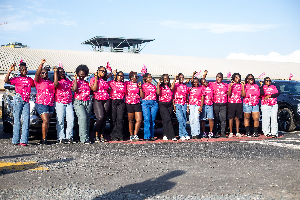 Participants of the Pink Ride event