Media personality Serwaa Amihere recently found herself at the centre of a social media debate after her remarks about wearing fake products sparked widespread discussion.
While wearing replicas or counterfeit items is a common practice among middle- and low-income Ghanaians, people in higher-income brackets have also spoken out against it from time to time.
Such comments often attract backlash.
But beyond the noise on social media, what does Ghanaian law actually say about wearing replica designer pieces?
For sellers, importers, and manufacturers
If you are involved in manufacturing, importing, distributing or selling counterfeit goods, you could face serious legal consequences.
The Laws
Counterfeiting branded products violates the Trademarks Act, 2004 (Act 664) as amended by the Trademarks (Amendment) Act, 2014 (Act 876), alongside provisions from the Criminal Offences Act, 2004 and various intellectual property frameworks monitored by law enforcement.
The Penalties
Under Act 876, individuals convicted of dealing in counterfeit goods face heavy fines ranging from 2,500 to 7,000 penalty units (with a penalty unit valued at GH₵12) and/or prison sentences stretching from 5 to 15 years.
Sweeps and Destruction
The Ghana Police Service Criminal Investigations Department (CID) has the ability to conduct market sweeps to arrest dealers and seize fake goods, which courts can order destroyed.
Brand owners can also launch civil lawsuits in the High Court seeking heavy damages and accounts of profits.
What about everyday wearers?
So, where does that leave the fashion enthusiast stepping out in a replica designer tee or knockoff kicks?
Under Ghanaian law, wearing counterfeit clothing for personal use is not explicitly targeted or criminalized as a standalone offense.
Law enforcement and regulatory efforts focus heavily on the commercial chain, that is, the people profiting from the distribution of fake merchandise.
There are no active legal provisions for citizens wearing a fake-branded shirt, shoe, or pair of trousers.
The One Major Exception
While you can technically walk down the street in replica luxury wear, there is one massive exception to civilian fashion choices: military and police uniforms.
Under the Restriction on Use of Military Uniforms and Equipment Act, 1967 (NLCD 177), as amended by Act 746, it is a direct criminal offense for any unauthorized civilian to wear, buy, or possess military camouflage or official gear.
That is one "fake" look that will land one in trouble.
The Verdict
While the internet will continue to debate the ethics and optics of rocking replica items, Ghanaian law focuses on the 'businessmen' flooding the market with fakes, rather than the average consumer styling on a budget.
ID/EB
Entertainment of Wednesday, 28 October 2026
Source: www.ghanaweb.com
What Ghanaian law actually says about wearing fake designer items
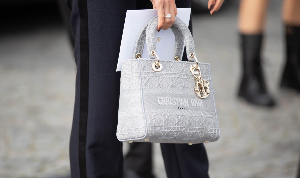 File photo of a Christian Dior Lady D-Lite handbag