Sexual harassment and discrimination remain widespread challenges for young women working in Ghana's creative sector, according to findings unveiled Tuesday, July 28, 2026 at the national dissemination of the Behind the Scenes (BtS) research project in Accra, though researchers also found many of these women continue to find fulfilment in their work and remain determined to succeed despite the barriers.
The findings were presented by Prof. Joshua Amo-Adjei of the University of Cape Coast's Department of Population and Health, Co-Lead of the project, at an event held at the AH Hotel and chaired by Dr. Rebecca Ohene-Asah, Dean of the Faculty of Arts at UniMAC.
He told the gathering that despite the scale of the challenges documented, young women's resilience and continued commitment to their creative work should shape how stakeholders design future support and interventions.
The BtS project is led by UCC's Department of Sociology and Anthropology, under Country Lead Prof. Georgina Yaa Oduro and Co-Lead Prof. Amo-Adjei, with support from the International Center for Research on Women (ICRW) in partnership with the Mastercard Foundation.
In her opening remarks, Prof. Oduro walked participants through the project's journey since its inception in 2024, its focus on both documenting young women's experiences and building youth research capacity, and the contribution of National Creative Ambassador Juliana Amoateng in carrying the work to the public.
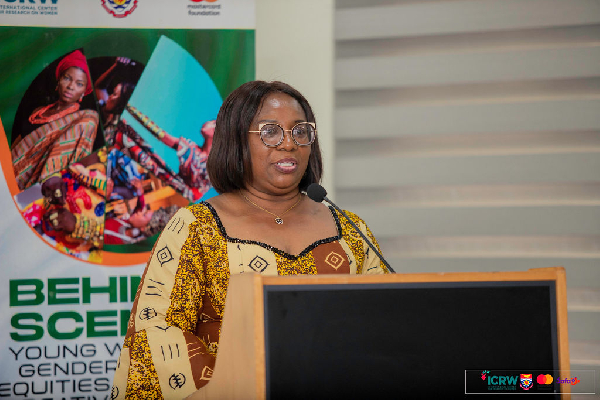
Prof. Georgina Yaa Oduro, Lead Researcher
She thanked stakeholders who had supported the project from its earliest workshop through to the day's dissemination.
Speaking on behalf of the Minister for Gender, Children and Social Protection, Madam Vera Karikari Bediako, a Ministry representative linked the findings to Ghana's recently passed Affirmative Action (Gender Equity) Act, noting that its provisions on eliminating gender-based discrimination and expanding women's representation apply as much to the creative economy as to the public sector.
She outlined ongoing Ministry efforts including a Gender Equity Committee and Secretariat, stakeholder engagements and public education campaigns to support the Act's implementation, and described the BtS evidence as valuable input for shaping those interventions.
Also addressing the gathering, the Ministry Representative for the Ministry for Tourism, Culture and Creative Arts, Dr. Fio Richardson Commey called for the findings to translate into safer workspaces, institutional protections and clearer leadership pathways for women in the industry, committing the Ministry to work with the Creative Arts Agency on the recommendations.
Juliana Amoateng, the National Creative Ambassador for Ghana, reflecting on months of translating the research for public audiences, said women had responded to the findings on harassment and unequal pay not with surprise but with recognition, sharing their own experiences once the data gave language to what they had long carried, and urged stakeholders to treat the day as a starting point for action rather than its conclusion.
The event drew representatives from the Mastercard Foundation, ICRW, UNESCO, DRIC-UCC, UniMAC, the Ghana Culture Forum, GAFTA, UNFPA, the Ghana National Research Fund (GNRF), the Ghana Education Service (GES) and the National Theatre of Ghana, several of whom delivered messages of solidarity and reaffirmed their institutions' commitment to the project.
The dissemination forms part of a wider seven-country study also running in Ethiopia, Kenya, Nigeria, Rwanda, Senegal and Uganda.
Entertainment of Monday, 3 August 2026
Source: Oswald Okaitei, Contributor
BtS study finds sexual harassment 'rampant' for young women in Ghana's creative industry
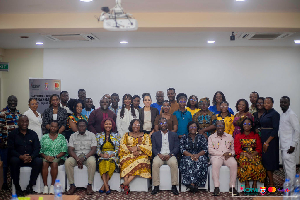 Participants at the event