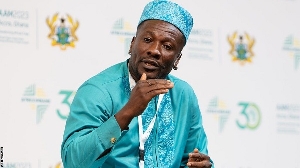
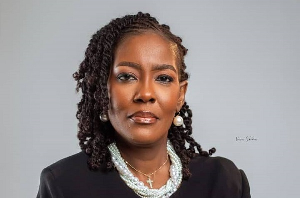
The ongoing conversation surrounding the revival of Ghana’s Kumawood movie industry has taken a new turn following strong criticism from veteran industry figure Peter Ekpe Mawuli, popularly known as “Abro,” the former Public Relations Officer of the Film Producers Association of Ghana (FIPAG).
In an interview with Naacy on Best 90.5FM in Bogoso, Abro openly expressed disappointment in the leadership and direction of initiatives spearheaded by Dr. Frank Amoakohene, claiming that the Ashanti Regional Minister has failed to deliver on promises made to revive the once-thriving Kumawood movie industry.
Initial Hope for Kumawood Revival
According to Abro, many stakeholders within the Kumawood industry initially welcomed the appointment of Dr. Frank Amoakohene as Ashanti Regional Minister with optimism.
The minister publicly declared his intention to help revive the movie industry in the Ashanti Region, a move that gained widespread support from actors, producers, directors, and other creative industry players.
Abro noted that industry players believed the initiative would bring renewed investment, production opportunities, structured policies, and long-term growth to Kumawood, which has struggled in recent years.
However, he claims that after a few months, many practitioners began to lose confidence in the process.
One of the major concerns raised by Abro was the direction of activities organized under the supposed Kumawood revival agenda.
Referring to the recently held Kumawood Akwaaba Festival, he argued that the event failed to address the real challenges confronting the film industry.
Instead, he claimed the focus was placed heavily on stage performances and theatrical exhibitions rather than practical initiatives aimed at rebuilding the movie sector.
According to him, theater and stage drama are entirely different from filmmaking and should not replace conversations and investments centered on movie production, distribution, marketing, and actor development.
“The purpose was to revive the movie industry, not to organize stage plays while neglecting the actual filmmakers,” Abro stated during the interview.
He further questioned whether the events being organized are genuinely intended to rebuild Kumawood or simply serve as publicity platforms.
Abro also referenced the recent celebrity runway event held at the Suame Interchange, where several entertainers and public figures participated alongside the minister.
While acknowledging that celebrities can help promote developmental initiatives, he argued that such activities do little to address the pressing issues facing Kumawood practitioners, including lack of funding, declining movie production, limited cinema distribution, and inadequate support systems for actors and producers.
According to him, the industry expected strategic interventions and policy-driven support rather than symbolic public appearances.
He accused the minister of allegedly using the influence and popularity of Kumawood stars for personal image-building rather than focusing on meaningful industry transformation.
Allegations of Political Division Within the Industry
Another major issue raised by the former FIPAG PRO was what he described as increasing political favoritism within the movie industry.
Abro alleged that meetings and industry-related programs are now being organized with only selected individuals, leaving out many experienced stakeholders. He argued that the creative arts industry should remain inclusive and independent from partisan politics.
According to him, some practitioners believe that opportunities are increasingly being influenced by political affiliation rather than merit or contribution to the industry.
“The movie industry is for everybody. Creativity should not be based on political lines,” he emphasized.
He warned that politicizing the industry could create further division and weaken collective efforts to rebuild Kumawood.
Abro also made claims regarding attempts to register the “Kumawood” brand name.
According to him, the term had already been associated with filmmaker and media entrepreneur Nana Yaw Adu-Dwomoh, popularly known as Sam Dakus, who reportedly owns Kumawood TV and had previously registered the name
He criticized what he described as attempts by others to take ownership of the Kumawood brand without proper consultation with its original owner.
To him, such actions demonstrate a lack of respect for industry pioneers and stakeholders who contributed to building the Kumawood identity over the years.
Entertainment of Thursday, 21 May 2026
Source: AlltunezGh, Contributor
'Dr Frank Amoakohene has failed Kumawood!' - Former FIPAG PRO Abro
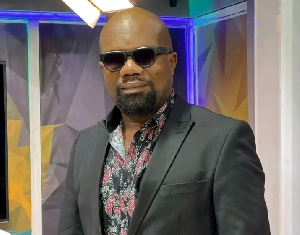 Abro is the former PRO of FIPAG