Ghanaian rapper Edem has opened up about the challenges artistes face after achieving mainstream success, particularly those who create music in minority languages.
Speaking in an interview on Joy Prime on May 13, 2026, he explained that many up-and-coming artistes assume the struggle ends once they become popular, but maintaining success comes with its own set of difficulties.
According to him, one of the biggest challenges is navigating relationships, public expectations, and stereotypes that emerge after an artiste gains national and international recognition.
“When you’re an underground artiste, you will think it’s difficult, but when you break out, navigating the relationships and certain stereotypes becomes another challenge,” he said.
Edem noted that making music in Ewe, a language spoken predominantly in the Volta Region, requires significantly more effort compared to songs performed in more widely spoken languages.
“What I’ve come to learn is that people use the stereotype as a business advantage. How fans will pass certain comments, during certain concerts, when you become national. It’s also very difficult when you’re coming from where I’m coming from and you have to push the product because it’s a minority language. You might have to do twice the work someone is doing and I will cite an example,” he stated.
‘I chased Hammer for three years’ - Edem recounts breakthrough process
To illustrate his point, the rapper said some songs become nationwide hits in Ghana without music videos if they are performed in Akan, whereas artistes using minority languages often need to invest heavily in visuals and promotion to achieve a similar reach.
“I have songs that are very big in the region, but they were Akan songs; they will be big across Ghana without a video. You might be spending more money shooting a video to be able to get the message across to the entire nation,” he explained.
Edem also highlighted the difficulty of navigating the music industry without mentors and the psychological pressure of being an independent artiste responsible for sourcing funds to sustain a music career.
“It’s not anybody’s fault, but it’s your responsibility to push it like that. It’s also difficult when you don’t have direct people who can mentor you. Because I don’t have anybody I look up to, I just go and think this is how far it can go, then I reach there and I think there’s further to go,” he shared.
He added, “Dealing with the psychological part of the business, where you’re the artiste and you’re also an independent artiste, so you have to find resources to be able to continue to push the craft. It’s a very difficult thing to navigate because you have to get people to believe in you to put money in your craft.”
FG/EB
The storyteller! Kofi Kinaata bags double wins at TGMA27
Entertainment of Thursday, 14 May 2026
Source: www.ghanaweb.com
You have to work twice as hard when you rap in a ‘minority language’ – Edem
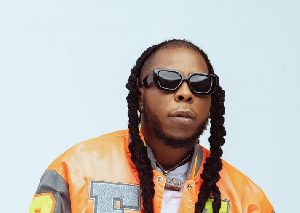 Edem is a Ghanaian rapper