Some scientists argue that a low-salt diet is just as dangerous as high salt consumption.
What's the reality?
In 2017, Turkish chef Nusret Gökçe went viral after a video lovingly seasoning a massive steak with a pinch of salt amassed millions of views online and earned him the nickname "salt bae". But it wasn't just his attention to detail that captured attention.
We're obsessed with salt – despite warnings, almost every population around the world consumes almost twice as much as they should be and its harming our health in the process. But a counter-argument is gaining ground, casting doubt on decades of research and shedding light on the questions that still remain unanswered about our favourite seasoning.
Sodium, the key element found in salt, is essential for our bodies to maintain its overall fluid balance, transport oxygen and nutrients. It allows our nerves to pulse with electricity. But most populations have historically eaten more salt than advised and health officials around the world have had their work cut out for them convincing us to cut down.
How much salt should you consume daily?
The World Health Organization (WHO) recommends limiting sodium consumption to less than 2g per day, which is around 5g of sodium chloride salt. In the US, the Dietary Guidelines for Americans recommends that adults limit their intake to less than 2.3g of sodium per day, or about a teaspoon of salt.
Researchers in a 2022 paper concluded that moderate sodium consumption (between 3 and 6g per day) is best for reducing the risk of heart disease, compared to low and high-sodium diets.
Guidelines from the NHS in the UK recommend adults have no more than 6g of salt per day, including salt that's already in the food we buy and salt we add ourselves during or after cooking. In the UK, average salt consumption is closer to 8.4g per day, while in the US it is 8.5g. Meanwhile, the WHO estimates that average salt intake globally has risen to almost 10.8g per day.
But only a quarter of our daily intake comes from salt we add to food ourselves – the rest is hidden in the food we buy, including bread, sauces, soups, and some cereals.
Adding to the confusion is that on food labels, manufacturers often refer to sodium content rather than salt, which can make us think we're consuming less salt than we are.
Salt is made up of both sodium and chloride ions. In 2.5g of salt, there is about 1g of sodium. "The general public isn't aware of this, and just thinks sodium and salt are the same thing. No one tells you this," says nutritionist May Simpkin.
According to the US Centers for Disease Control and Prevention (CDC), about 40% of the sodium consumed by people in the US comes from foods including pizza, deli meat, burritos and tacos, savory snacks, poultry, and burgers.
The health risks of consuming too much salt
Research has found that too much salt causes high blood pressure, which can lead to strokes and heart disease. Experts broadly agree that the evidence against salt is compelling. Our bodies retain water when we eat salt, increasing blood pressure until our kidneys flush it out.
Too much salt over a long period of time can put strain on our arteries and lead to prolonged high blood pressure, known as hypertension, which causes 62% of all strokes and 49% of coronary heart disease events, according to the WHO. It estimates that excessive sodium intake is responsible for 1.89 million deaths globally every year.
One meta-analysis of 13 studies published over 35 years found a 17% greater risk of total cardiovascular disease and a 23% greater risk of stroke from consuming an extra 5g of salt per day.
The health benefits of cutting salt intake
As you might expect, cutting salt intake can have the reverse effect.
In one eight-year data analysis from the Health Survey for England, researchers found that a decline in salt intake by 1.4g per day was likely to have contributed to a fall in blood pressure, which in turn contributed to the 42% decline in fatal strokes and 40% drop in heart disease-related deaths.
A more recent clinical trial published in 2023 found that following a low-sodium diet for one week had a blood pressure-lowering effect comparable to a drug commonly given to patients with high blood pressure.
However, researchers who've carried out observational studies often concluded that it's difficult to entirely separate the effects of eating less salt from other diet and lifestyle behaviours, since those who are more conscious of their salt intake are more likely to eat healthier overall, exercise more, smoke less and drink less.
Randomised trials showing salt's effect on the body are almost impossible to carry out. But there are also no randomised trial for obesity, or smoking, which we know kills you – Francesco Cappuccio
Long-term, randomised trials comparing people who eat a lot versus a little salt could establish cause and effect. But very few such studies exist because of the funding requirements and ethical implications. "Randomised trials showing salt's effect on the body are almost impossible to carry out," says Francesco Cappuccio, professor of cardiovascular medicine and epidemiology at the University of Warwick's medical school and author of the eight-year review.
"But there are also no randomised trials for obesity, or smoking, which we know kills you."
Meanwhile, observational evidence is in abundance. After the Japanese government launched a campaign to persuade people to reduce their salt intake in the late 1960s, intake decreased from 13.5g to 12g per day. Over the same period there were falls in blood pressure and an 80% reduction in stroke mortality. In Finland, daily salt intake dropped from 12g in the late 1970s to as little as 9g by 2002, and there was a 75-80% decrease in deaths from stroke and heart disease in the same period.
How salt consumption affects everyone differently
But an additional complicating factor is that the effects of salt consumption on blood pressure and heart health differ from one individual to another.
Studies have found that our salt sensitivity varies from person to person, depending on factors as varied as ethnicity, age, body mass index, health, and family history of hypertension. Some studies have found that those with higher salt sensitivity are more at risk of salt-associated high blood pressure.
In fact, some scientists controversially argue that a low-salt diet is just as much of a risk factor for developing high blood pressure as high salt consumption. In other words, they say there is a J- or U-shaped curve with a threshold at the bottom where risk starts to go back up.
One meta-analysis, for example, pointed to a link between low salt intake and cardiovascular-related events and death. The researchers argued that consuming either less than 5.6g or more than 12.5g a day is associated with negative health outcomes.
Another study, published in 2020, stated that strict restrictions of salt intake were associated with worse health in patients with heart failure, especially among younger and non-white people. A "mini-review" of the evidence published in 2022 also concluded that a moderate sodium consumption of 3-6g per day is best for reducing the risk of heart disease, compared to low and high-sodium diets.
But these findings have been met with heavy criticism from the majority of researchers and public health bodies, who say the studies lack rigor and have flaws in the way salt intake is measured. They also point to conflicts of interest between the authors of some of these studies and the food industry, which could bias the results.
This has not prevented such findings from making headlines around the world. One study of 130,000 people, published in the high profile medical journal, the Lancet, received widespread attention when it reported a link between "low" salt intake, defined as less than 7.5g, and increased risk of cardiovascular events and death in people both with and without hypertension, compared to a "moderate" intake of up to 12.5g per day (between 1.5 to 2.5 teaspoons of salt). That moderate intake is up to double the UK recommended daily intake.
The study's lead author, Andrew Mente, a nutritional epidemiologist at McMaster University in Ontario, concluded that reducing salt intake from high to moderate reduces the risk of high blood pressure, but there are no health benefits beyond that. And increasing salt intake from low to moderate might help too.
"The finding of a sweet spot in the middle is consistent with what you would expect for any essential nutrient… where at high levels you have toxicity and at low levels you have deficiency," he says. "An optimal level is always found somewhere in the middle."
But not everyone agrees, with several experts in public health and cardiovascular disease publishing detailed criticisms of Mente's research, casting doubt over the findings. Others have called for better trials of salt consumption to help resolve the issue.
Cappuccio is unequivocal that a reduction in salt consumption reduces blood pressure in everyone, not just people who eat far too much. He says the wave of studies in recent years concluding contrary findings is small, includes participants who are already unwell, and rely on flawed data. Mente's study, he says, used a fasting spot urine test on participants instead of the "gold standard" of spreading several tests over a 24-hour period.
Sara Stanner, science director at the charity the British Nutrition Foundation, agrees the evidence that reducing salt intake in those with hypertension lowers blood pressure and risk of heart disease is strong. And there aren't many people consuming levels as low as 3g, the level at which some of this research calls dangerously low.
This would be difficult to achieve, Stanner says, due to the levels of salt in foods we buy.
"So much of the salt we consume is in everyday foods," she says. "This is why reformulation across the food supply chain is the most successful approach to cut down on national salt levels, as has been the case in the UK."
LifeStyle of Monday, 20 October 2025
Source: bbc.com
The truth about salt in your diet
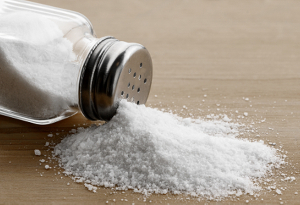 File photo of salt pouring out from a bottle