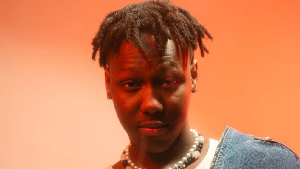
Rwanda’s Elvin Cena has been a serious musician since 2020. His career began rising thanks to releases such as “Ka Sa Lo” (2022) and “Jejeli” (2023), which earned him a following, including about 14,000 YouTube subscribers and over 10,000 monthly listeners on Spotify.
However, none of those songs reached the level of “Let Me Be”. Cena released the amapiano-inspired track in February, and it has since made waves on TikTok, garnered over 13 million combined YouTube views, and entered charts in countries across Europe and Africa, peaking at No. 12 in France and making the top 10 in Kenya and Tanzania.
Until recently, only a few music lovers knew that “Let Me Be” was created or heavily assisted by Artificial Intelligence (AI).
“I don’t want to say that it’s me who sang the song, because it’s not me,” Cena said to OkayAfrica in an interview in April. “I want to say that it’s a real song, but it’s an AI song.”
The Rwandan-born artist initially recorded the song with his own lyrics and melody in a studio in France, where he is currently studying, about six months before it went viral. But the 21-year-old didn’t enjoy the finished work, so he decided not to release it.
Later, he began experimenting with the song, using AI. He uploaded the original song to Suno AI, a generative artificial intelligence platform that creates full songs—including lyrics, vocals, and instrumentation—from simple text prompts. Cena reworked the song into an amapiano style and added a digitally generated female voice in the second verse.
“I started with amapiano because I needed something that was danceable,” he explained. “In the second verse, I need a woman singing with me.”
He likened the process of reshaping the song to using ChatGPT to write a CV. After several adjustments, he got what he wanted, but he was reluctant to release the song under his personal brand because it was made with AI tools.
Thus, he uploaded it to a separate YouTube channel under the name “The Second Voice” on February 8.
“I’m an artist too and I don’t want to be associated with AI 100 percent,” he said. “It’s not a human. It’s just a name I gave to it.”
Within days, the song started spreading on social media, reaching one million views and being used in several TikTok videos.
“I saw people start to post my song in their Instagram [stories]. And I was like, ‘That’s my song! That’s my song!’” he said. “I checked TikTok and the song has been used in over 50,000 videos.”
Observing the song’s success, Cena decided to fully claim it, so he released an official video and credited it with his name — “The Second Voice featuring Elvin Cena.” He uploaded it to Elvin Cena Production, a YouTube channel where he posts video edits and his other projects, he said.
“After it hit one million, I saw the song was climbing a lot of charts,” he said. “I added my name to also promote my work and my name, because it’s my project too.”
Suno AI is increasingly reshaping the music industry by enabling the mass production of high-quality AI music, producing millions of songs daily. Research from French streaming service Deezer suggests that 97% of people cannot distinguish between AI and human-generated music.
Amid ethical and legal debates concerning the use of copyrighted data to train AI models without consent, some critics of the music AI startup are starting to get on board.
When asked whether he feels guilty that listeners may now get to know that “Let Me Be” was created with AI, Cena said, “No, not really.”
“They have to understand. It’s just the beginning of the future.”
“In one year, I can see that it will be normal to listen to AI music.”
“The future is like when the internet started,” he continued. “Everybody was [worried], but finally everyone is using it.”
Even though he has welcomed the technology, Cena said it should in no way replace human creativity but add to it.
“Use it to give you some ideas, not to use it 100 percent,” he said.
Entertainment of Thursday, 14 May 2026
Source: face2faceafrica.com