The Ghanaian music industry has witnessed this countless times: an artiste with genuine talent, the ability to command a room, write songs that move people and deliver performances that leave a lasting impression.
Yet, three years later, some of these talented musicians are still performing to the same small audiences and struggling to make the transition into the mainstream.
Over the years, researchers and professionals in the creative industry have repeatedly pointed out that talent alone does not determine success in music.
The common assumption is that success in the music industry follows a straightforward formula: make good music, release it, build a following and eventually get noticed.
But in an increasingly crowded industry, that approach, sometimes described as “spray and pray”, is rarely enough.
So, why do some talented Ghanaian musicians struggle to break through despite having the ability to become the next big thing?
Lack of financial backing
For many emerging artistes, money remains one of the biggest barriers to breaking into the mainstream.
Emerging artiste Flayma also believes the sacrifices, struggles and hard work young musicians go through are part of building the foundation for a successful career.
However, he identified financial constraints as a factor that prevents some talented artistes from reaching a wider audience.
How Ghanaian musicians make money beyond stage performances
According to him, an artiste may have all the necessary talent but still struggle to break through if there is not enough money to properly promote their music.
Without adequate promotion, talented musicians may find it difficult to reach the large audiences needed to build momentum and establish themselves in the mainstream.
Artiste manager Panzy, who has worked with some notable emerging musicians, also acknowledged that finance is an important factor.
However, he noted that having money alone does not guarantee success. He said some artistes may have financial backing but fail to channel those resources effectively into their careers.
He advised emerging artistes to attend industry seminars, find mentors within the music space and develop a unique identity as ways of improving their chances in an increasingly saturated industry.
Hard work does not always mean the right work
Many artistes work extremely hard.
They write songs, record, rehearse, create social media content, interact with fans and perform at shows.
But according to industry observers, working hard and working strategically are not necessarily the same thing.
An artiste can spend years putting in the effort without seeing significant progress if the work is not directed towards the areas that can actually move their career forward.
Success therefore requires more than consistency. It requires understanding what needs to be done, why it needs to be done and how each activity contributes to a larger career plan.
The business knowledge gap
Talent may get an artiste noticed, but understanding the business can determine whether that talent develops into a sustainable career.
The modern music industry rewards business knowledge almost as much as musical ability.
Artistes need to understand contracts, licensing agreements, royalties, publishing splits and intellectual property rights.
They also need to know exactly what rights they are giving away when signing a record deal or accepting a collaboration.
This is not knowledge that can simply be postponed until an artiste becomes successful. It is foundational to building a career.
The Ghanaian music industry has seen artistes sign agreements without fully understanding the percentages involved. There have also been instances where musicians accepted deals that appeared attractive initially but eventually locked them into unfavourable terms for years.
Treating music like a hobby
Another challenge is the failure to transition from making music as a passion to treating it as a career.
Some musicians may produce excellent songs but operate without a structured business plan, proper budgeting or effective cash-flow management.
A sustainable music career requires an artiste to think beyond the next song.
They need to consider how they will finance projects, manage income, invest in their brand and create multiple ways of making money from their music.
Here’s the real cost of releasing a song as an independent artiste in Ghana
The “spray and pray” trap
One of the most common approaches among emerging musicians is to release music widely and hope that something eventually catches on.
An artiste uploads a song to streaming platforms, posts about it on social media and waits for algorithms, blogs, DJs or influencers to discover it.
This has been described as the “spray and pray” approach.
Research cited by Artist Republic suggests that simply uploading music across platforms and waiting for algorithms to generate attention has an extremely low success rate.
Visibility alone does not automatically translate into a successful career.
An artiste needs a deliberate strategy for reaching the right audience, building a fan base and turning attention into long-term support.
Marketing is part of the music business
Many artistes understand that they need marketing but struggle to incorporate it into their creative process.
Some treat marketing as something that happens after the music has been completed.
They record the song first and only afterwards begin thinking about how to promote it.
Industry experts argue that this approach needs to change.
Marketing should not be viewed as a promotional activity that follows music creation. It should be part of how an artiste builds a relationship with an audience.
Weak networking and collaboration skills
The Ghanaian music industry is heavily driven by relationships.
An artiste can be talented, but if they remain isolated from producers, managers, DJs, promoters, media personalities, event organisers and other industry players, their opportunities may remain limited.
Discussions among music professionals have also pointed to networking, self-promotion and interpersonal skills as areas some talented musicians neglect.
Professional conduct matters as well.
An artiste who is difficult to work with, unreliable or consistently unprofessional may lose opportunities regardless of their talent.
Talent can attract attention, but professionalism helps sustain relationships.
Failing to develop a unique identity
The music industry is increasingly saturated with technically talented musicians.
As a result, being able to sing well, rap well or produce good music may not be enough to stand out.
An artiste who sounds exactly like everyone else can easily become lost in the crowd.
A strong artistic identity gives audiences a reason to remember and follow an artiste.
Originality can come through sound, storytelling, image, performance, personality or the themes explored in the music.
The emotional connection matters
Technical ability is important, but audiences do not always connect with music simply because an artiste has a powerful voice or impressive lyrical ability.
People often connect with music because it tells a story they understand or captures emotions they have experienced.
In Ghana, Kweku Smoke is one artiste who has demonstrated an ability to connect emotionally with his audience.
Black Sherif also built a strong emotional connection with listeners during his formative years, while Kwesi Arthur is another example of an artiste who has been able to connect with audiences through personal storytelling and relatable themes.
That emotional connection can turn casual listeners into loyal fans.
Successful artistes possess more than just talent
Talent remains important, but successful artistes often possess other qualities that help them turn their talent into a career.
Drive, discipline, determination, curiosity, confidence, a strong work ethic and a willingness to learn can all make a difference.
The ability to accept criticism, adapt to changes in the industry and continuously improve can also separate artistes who remain at the emerging stage from those who build lasting careers.
Social media has changed the game
The Ghanaian music industry has changed significantly over the past decade.
The internet and social media have created countless new avenues for musicians to distribute their work, reach audiences and build fan communities without relying entirely on traditional gatekeepers.
An artiste can now make their music accessible to potential fans around the world.
Ghanaian artistes such as Moliy have demonstrated how powerful social media can be.
Her song “Shake It to the Max” gained huge international attention, showing how an artiste can use digital platforms to push music beyond Ghana and reach a much wider audience.
What actually works?
For emerging artistes, building a sustainable career requires more than producing good songs.
First, musicians need to develop business literacy alongside their artistic skills. Understanding contracts, royalties, licensing, publishing and rights management can help protect their work and ensure they receive fair value.
Second, they need to prioritise genuine relationships rather than vanity metrics. Having thousands of followers is less valuable if there is no meaningful connection between the artiste and the audience.
Third, marketing should be integrated into the creative process. Artistes should think about audience-building while developing their music rather than waiting until a song is finished before deciding how to promote it.
They also need to think strategically about their career path.
Knowing where they want to go, understanding the steps required to get there and deliberately working towards those goals can help artistes avoid spending years simply releasing music without a clear direction.
Finally, musicians should build multiple sources of income rather than depending entirely on streaming.
This could include performances, songwriting, publishing, brand partnerships, merchandise, licensing and other opportunities connected to their creative work.
There is no single formula that guarantees an artiste will become successful.
But talent becomes far more valuable when it is supported by business knowledge, strategic thinking, marketing, networking, originality, discipline and a genuine connection with an audience.
AK/EB
Entertainment of Monday, 5 October 2026
Source: www.ghanaweb.com
EXPLAINER: Why some talented Ghanaian musicians never break through
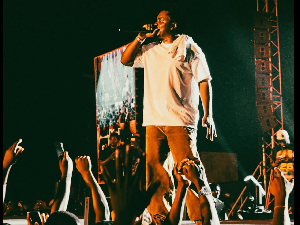 Kweku Smoke has earned industry recognition and strong support from Ghanaian music fans