The birth of the United Party (UP) on November 3, 1957, marked a defining moment in Ghana’s early political history, as several opposition movements united under one political umbrella to challenge the growing dominance of Dr Kwame Nkrumah and his Convention People’s Party (CPP).
Ghana had been independent for barely eight months when a major political realignment took place in Accra. On November 3, 1957, the United Party (UP) was formally inaugurated at a rally presided over by Dr Kofi Abrefa Busia, bringing together different political groups that had opposed Nkrumah and the CPP.
The formation of the party was driven by the need for a united opposition at a time when political tensions were rising between the governing CPP and its critics.
The UP brought together six political movements: the National Liberation Movement (NLM), the Northern People's Party (NPP), the Muslim Association Party, the Togoland Congress, the Anlo Youth Organisation and the Ga Shifimo Kpee.
These groups had previously operated independently, representing different regional, ethnic and political interests. Their decision to come together was largely influenced by the political climate following independence and the passage of the Avoidance of Discrimination Act in 1957, which prohibited political organisations based on racial, religious, regional or ethnic affiliations.
Rather than disappear under the new legal restrictions, the opposition groups consolidated their political strength through the formation of the United Party.
The inauguration was significant because it transformed what had been a collection of separate opposition movements into a single political force. The party's executive drew representatives from its constituent organisations, with prominent political figures including Dr J.B. Danquah, Obetsebi-Lamptey, Joe Appiah, M.K. Apaloo and other influential politicians.
Although Busia presided over the inauguration and emerged as a leading figure in the opposition, Alex Hutton-Mills was identified as the party's national leader, while Busia served as its parliamentary leader. The UP reportedly had the support of 32 members of Parliament at its inauguration.
A formidable opposition to Nkrumah
The United Party became the principal opposition force against Nkrumah's CPP during the early years of independent Ghana.
Its emergence, however, did not end the political rivalry between the two camps. Instead, the relationship between the government and the opposition became increasingly strained, with accusations of political intimidation, harassment and attempts to suppress dissent.
The passage of the Preventive Detention Act in 1958 further complicated the situation. The law gave the government powers to detain individuals without trial, and several opposition figures, including members of the UP, were subsequently detained.
Historical accounts also document the weakening of the party through arrests, defections and the departure of some of its leading figures into exile. Busia himself eventually left Ghana in 1959.
The political struggle reached another turning point in 1964 when Ghana formally became a one-party state under Nkrumah, effectively ending the United Party's existence as a recognised opposition force.
However, the party's political legacy did not disappear. Its ideological and political tradition later found expression in the Progress Party, which Busia led to victory in the 1969 general election after Ghana returned to civilian constitutional rule.
More than six decades later, the inauguration of the United Party remains an important chapter in Ghana's political evolution. It demonstrated how competing political movements could put aside their differences to establish a common front against a dominant governing party.
It also marked an early chapter in the political tradition associated with the Danquah-Busia political heritage, which continues to influence Ghana's multiparty politics.
EA
Politics of Tuesday, 3 November 2026
Source: www.ghanaweb.com
Today in History: The birth of Ghana's United Party
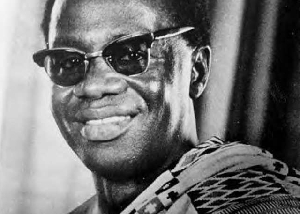 Photo of Dr Kofi Abrefa Busia