National Chairman of the National Democratic Congress (NDC), Johnson Asiedu Nketiah, has described democracy as an imperfect system of governance but insisted that no better alternative has yet been found, urging continuous reforms to make it more effective.
Speaking in an interview on Ambassador TV while discussing the Supreme Court's ruling on Ghana's delegate system, Nketiah traced the evolution of democracy from ancient Greece, where citizens participated directly in decision-making, to today's representative democracy.
“Democracy started in Greece, and when it started, all the people gathered to share their ideas and make decisions. That was direct democracy," he explained.
According to him, representative democracy emerged as countries expanded, making it impossible for every citizen to participate directly in governance. However, he noted that the system has its own shortcomings because elected representatives sometimes pursue their personal interests instead of the wishes of the people.
"The disadvantage we have seen in representative democracy is that individual representatives have their own mindset and ideas, which sometimes differ from what the people want," he said.
Nketiah recalled that former Libyan leader Muammar Gaddafi had advocated a return to direct democracy, arguing that representative democracy was ineffective. He noted, however, that the proposal never gained global acceptance.
"Late Gaddafi said representative democracy was not as effective as direct democracy and that direct democracy would help, but nobody worked with it," he stated.
Despite the weaknesses of representative democracy, Nketiah maintained that it remains the most practical system available.
"We usually say democracy is the worst system of government, but there is no better alternative," he said.
He therefore called for continuous reforms to improve democratic governance rather than abandoning the system altogether.
"So if adjustments can be made to make democracy better, then we should consider them," Nketiah added, arguing that reforms such as improving internal party democracy and reducing the influence of money in politics would strengthen public confidence in Ghana's democratic system.
Politics of Monday, 10 August 2026
Source: mynewsgh.com
Worst system, best option – Asiedu Nketiah on democracy
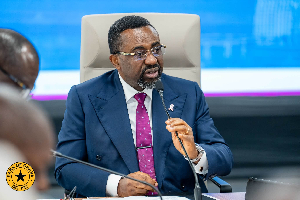
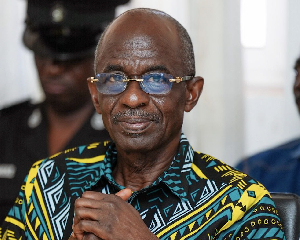 Johnson Asiedu Nketiah is the National Chairman of the NDC