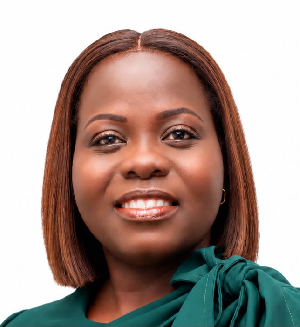
The Chairperson of Parliament’s Public Accounts Committee (PAC), Abena Osei-Asare, has called for a collective national effort to combat corruption, stressing the need for transparency and accountability in the management of public funds and political party financing.
She made the call during a National Multi-Stakeholder Dialogue on Advancing Anti-Corruption Policy Uptake in Ghana, organised by the Ghana Anti-Corruption Coalition (GACC), in partnership with the Ghana Centre for Democratic Development (CDD-Ghana) and Transparency International Ghana (TI-Ghana), with support from the European Union.
Speaking at the event on November 19, 2026, Abena Osei-Asare said the fight against corruption required the commitment of every Ghanaian, including taxpayers, public officials and politicians.
She stressed that “taxpayers must fulfil their obligations by paying the correct amounts due to the state, while public officials entrusted with collecting and managing the funds must ensure they are used for their intended purposes.”
According to her, public resources allocated for essential projects such as schools and hospitals must be used to deliver those facilities rather than diverted for other purposes.
She also raised concerns about the lack of transparency in political party financing, arguing that Ghana's performance in that area remained unsatisfactory because of inadequate disclosure of financial information and accounts.
The PAC Chairperson urged the Electoral Commission (EC) to demand the necessary financial information from political parties to promote transparency and reduce corruption within the political system.
Benjamin Danso unseats NDC’s Greater Accra Regional Chairman Ashie Moore
She further noted that the Right to Information Act had contributed to the fight against illicit financial flows by allowing citizens to access information and demand accountability from public institutions.
Meanwhile, a Democracy and Development Fellow at CDD-Ghana, Professor John Osae-Kwapong, identified gaps in Ghana's campaign financing laws, particularly the limited focus on political parties rather than individual candidates.
He argued that the existing framework must be expanded to regulate candidates' conduct during internal party elections and national elections.
Prof Osae-Kwapong also called for clearer and more deterrent sanctions for electoral offences, including vote buying and the use of inappropriate materials during campaigns.
He further advocated spending limits, regulations on campaign fundraising and greater transparency in the sources of funds used by political parties and candidates.
He said political parties should also strengthen their internal disciplinary mechanisms by introducing measures such as disqualifying candidates or invalidating election results where necessary.
Programme Officer of the European Union in Ghana, Davide Messina, reaffirmed the EU's commitment to supporting Ghana's efforts to strengthen good governance, democratic accountability and transparent public institutions.
He warned that corruption undermines competitiveness, discourages foreign investment, hinders development and weakens public confidence in state institutions.
He also emphasised the importance of cooperation between anti-corruption agencies, civil society organisations and government institutions in addressing corruption.
The assessment identified weaknesses in the implementation, enforcement and transparency of the country's public ethics and campaign finance regulations, with stakeholders expected to deliberate on reforms to address the gaps.
AM
Godfred Nsiah Speaks on the Growth and Future of Jiu-Jitsu in Ashanti Region
Business News of Friday, 20 November 2026
Source: www.ghanaweb.com
PAC Chair calls for collective fight against corruption, transparency in political party funding
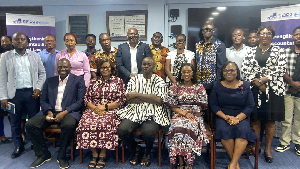 Some of the stakeholders at the event


Entertainment