Ghana’s public debt increased by GH¢23.5 billion between July and October 2026, reaching GH¢759.3 billion.
This is according to the Bank of Ghana’s latest economic and financial data for November 2026.
The new figure represents a 3.2% increase from the GH¢735.8 billion recorded in July.
Invest in Ghana, produce here and grow with us — Ato Forson urges investors
The data show that the debt declined slightly to GH¢732.1 billion in August before rising to GH¢756.8 billion in September and GH¢759.3 billion in October.
This means the country’s debt increased by GH¢27.2 billion between August and October.
As a proportion of the size of the economy, Ghana’s public debt rose from 46.1% of Gross Domestic Product (GDP) in July to 47.5% in October.
The debt also increased in US dollar terms, rising from US$63.4 billion in July to US$65.3 billion in October.
The figures indicate that Ghana’s public debt has generally been on an upward trajectory since the beginning of the year.
In January, the debt stood at GH¢663.4 billion before increasing to GH¢674.1 billion in February and GH¢686.1 billion in March.
It rose further to GH¢695.9 billion in April and GH¢720.8 billion in May.
Ghana’s external debt stood at US$28.5 billion, equivalent to GH¢331.4 billion, in July. This was lower than the US$29.1 billion recorded in May.
Meanwhile, domestic debt increased to GH¢427.9 billion in October, representing 26.8% of GDP.
Government revenue and expenditure
On government revenue and expenditure, the country recorded a cash fiscal deficit of 2.3% of GDP in July.
This means government expenditure exceeded its revenue during the period.
The primary balance, which measures government revenue against expenditure excluding interest payments on debt, recorded a surplus of 0.1% of GDP in October.
However, this was lower than the 1% surplus recorded in July.
ANAS/MA
“We Like the Design, Release It Now” – Ghanaians React to New Currency Notes
Business News of Wednesday, 18 November 2026
Source: www.ghanaweb.com
Ghana’s public debt increases by GH¢23.5 billion in three months
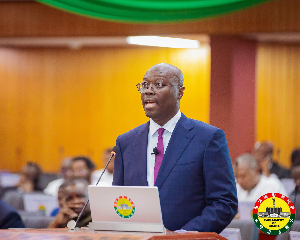 Dr Cassiel Ato Forson is the Minister of Finance