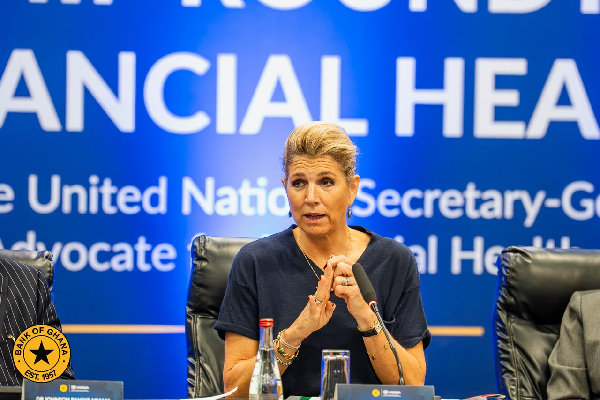
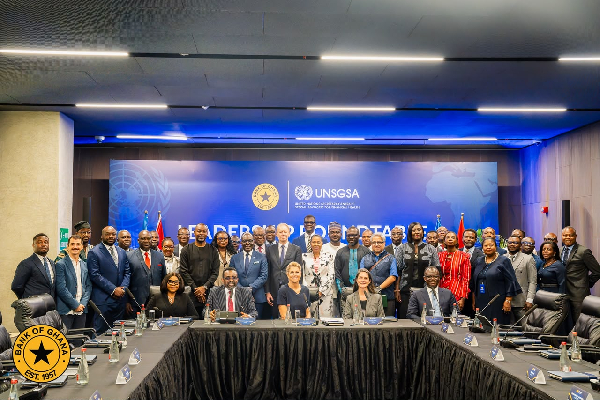
The Governor of the Bank of Ghana, Dr Johnson Pandit Asiama, and Queen Máxima of the Netherlands have called for greater focus on improving financial health, with particular attention to access to productive credit for individuals and businesses.
They made the call during a discussion on financial inclusion on November 4, 2026, where they highlighted the need for collaboration among government, regulators, financial institutions, and development partners to ensure that access to financial services translates into improved living conditions and business growth.
Dr Asiama said Ghana’s financial sector had undergone significant transformation over the past decade, driven by innovation, collaboration, and investment in digital infrastructure.
'I funded 90% of Quick Credit' – Richard Nii Armah Quaye's ex-wife alleges
He noted that these developments had made financial services more accessible to millions of people, positioning Ghana among Africa’s leading digital finance markets.
However, he stressed that access to financial services alone was not enough, arguing that the focus must now shift towards improving the financial health of households and businesses.
“Financial health is influenced by the ability to access savings, insurance, patient investment opportunities and financial literacy,” he said.
According to the Governor, one of the most important ways to improve financial health in Ghana is through productive and responsible credit.
He explained that appropriately designed credit facilities could help individuals invest in their future while providing businesses with the capital needed to expand, innovate, and create jobs.
He particularly highlighted the financing challenges facing micro, small, and medium-sized enterprises (MSMEs), which he described as the backbone of Ghana’s economic activity.
He said although these businesses create jobs, drive innovation, and support livelihoods across the country, many continue to face significant barriers in accessing finance.
“Credit is unavailable to businesses with the potential simply because of unfair mechanisms,” he noted.
Dr Asiama called for greater use of technology, data and innovation to broaden access to credit, address information gaps and create fair and sustainable financing opportunities for viable businesses.
He also identified the need to expand access to productive credit for MSMEs, women and smallholder farmers, while strengthening savings, insurance and long-term financial resilience.
“These questions require partnership across government, regulators, industry and development institutions,” he said, urging participants to engage in open discussions focused on practical solutions.
Queen Máxima, in her remarks, called for a clearer distinction between financial access and financial health, stressing that the two concepts should not be treated as the same.
She explained that financial access refers to the ability of individuals to obtain financial services, such as payment accounts, savings, credit, and insurance, while financial health concerns the actual benefits people derive from using those services.
“Financial access is a means to an end. Financial health is the end,” she said.
She outlined three important dimensions of financial health: the ability to manage day-to-day finances, withstand financial shocks, and plan for the future.
On day-to-day financial management, she said individuals needed the capacity to budget, plan their spending, and manage irregular income to meet their financial obligations.
She cited farmers who receive income from seasonal harvests as an example, explaining that they must plan how to use their earnings to meet expenses such as school fees, insurance premiums, and other household needs.
Queen Máxima also highlighted the importance of access to liquidity and suitable financial products that enable individuals and small business owners to manage temporary cash-flow challenges.
She explained that small business owners, for instance, may need short-term credit to purchase additional inventory while waiting to sell existing stock.
The second dimension, she said, was financial resilience, which involves the ability to withstand unexpected events such as illness, accidents, poor rainfall, and other economic or environmental shocks.
She emphasised the importance of health, life, and agricultural insurance, as well as emergency savings, in helping individuals and households cope with such situations.
“Emergency savings is extremely important,” she stressed, noting that people needed financial buffers to deal with unexpected expenses that insurance might not cover.
On long-term financial planning, Queen Máxima said individuals needed to save towards important future needs, including their children’s education, retirement, housing, and investments that could improve their livelihoods.
2027 Pay Deal: What the 9% package means for your salary
She cited the example of farmers who could save towards purchasing tractors and other equipment that would reduce their workload and increase their future income.
She also highlighted the importance of long-term savings and investment opportunities in helping individuals build financial security and improve their economic prospects.
See some photos below
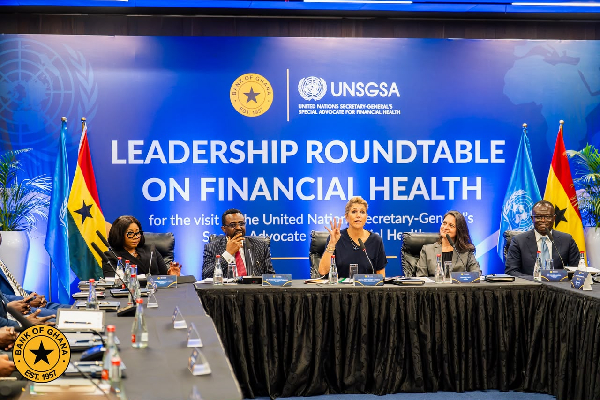


DR/MA
BoG Governor Gives Ghanaians Christmas Cedi Assurance | What He Promised
Business News of Wednesday, 4 November 2026
Source: www.ghanaweb.com
BoG Governor, Queen Máxima call for shift from financial access to financial health
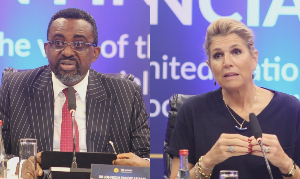 Governor of the Bank of Ghana, Dr Johnson Asiama and Queen Máxima of the Netherlands