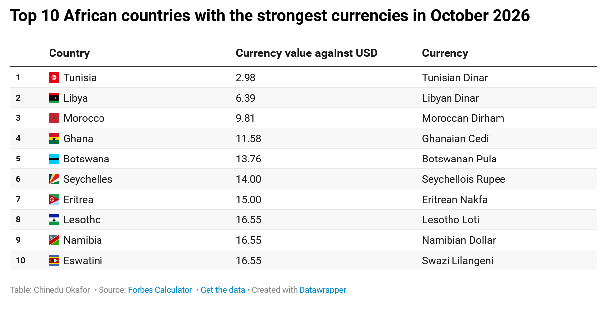
Ghana’s cedi has been ranked as the fourth most valuable currency in Africa against the US dollar, placing the country among the continent’s top five currencies by nominal exchange-rate value.
According to a report by Africa Business Insider, based on exchange-rate data from the Forbes currency converter, the cedi secured the fourth position in the October 2026 ranking.
Tunisia’s dinar emerged as the continent’s most valuable currency, trading at 2.98 to the dollar, followed by Libya’s dinar at 6.39 and Morocco’s dirham at 9.81.
Botswana’s pula placed fifth at 13.76 to the dollar, making Ghana the only West African country among the five highest-ranked currencies.
On Friday, the Bank of Ghana’s reference rate stood at approximately GH¢11.65 to the dollar, compared with about 16.5 for the South African rand, which is the continent’s most traded currency.
The ranking comes amid a period of sustained gains for the cedi, which recorded several weeks of appreciation in October, supported by improved foreign exchange availability and dollar supplies from the Ghana Gold Board (GoldBod).
On October 15, the cedi had appreciated by 1.5 per cent against the dollar since October 7, closing at GH¢11.65 to the US currency.
GoldBod’s dollar supplies to commercial banks have also helped improve access to foreign exchange for businesses requiring funds to settle international transactions.
What this means for Ghana
The cedi’s position in the continental ranking could have important implications for Ghana’s economy, particularly as the country relies heavily on imports of essential commodities such as fuel, machinery, medicines and food.
A stronger cedi reduces the amount of local currency importers need to purchase goods priced in dollars, potentially lowering the cost of imports and easing financial pressures on businesses.
These savings could also benefit consumers if businesses pass on the reductions through lower prices for imported goods, helping to ease inflationary pressures.
A relatively stable and stronger currency can further improve business confidence by reducing exchange-rate uncertainty for companies involved in international trade and investment.
It could also lower the cedi equivalent of Ghana’s foreign-denominated debt obligations, reducing the local currency cost of servicing external debt, although the overall impact depends on the country's debt structure and exchange-rate movements.
However, the benefits of the cedi’s appreciation will largely depend on whether the gains can be sustained over time. A stronger exchange rate does not automatically translate into lower prices, as domestic production costs, global commodity prices, taxes and the pace at which businesses adjust their prices also influence the cost of goods and services.
With additional files from Africa Business Insider
MA
Business News of Tuesday, 3 November 2026
Source: www.ghanaweb.com
Ghana's cedi ranks fourth most valuable currency in Africa – Report
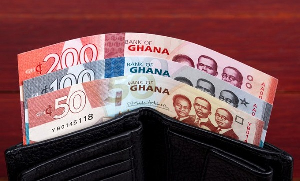 File photo of cedis notes