The Strategic Youth Network for Development (SYND) has called for greater access to contracts and investment opportunities for Ghanaian entrepreneurs under the country's updated Renewable Energy Master Plan (REMP).
Speaking at a press conference on September 2, 2026, SYND's Executive Coordinator, Chibeze Ezekiel, said local businesses were ready to help implement the plan but needed stronger government support.
According to his presentation, the plan covers 2026 to 2030, requires an estimated $10.8 billion in investment and could create more than 353,000 jobs.
He said Ghanaian businesses must be given opportunities to supply goods, provide services and undertake projects under the plan.
Government rejects GH¢629 million in T-bill bids despite strong demand
“Who gets those contracts and jobs matters,” he said.
The targets include the deployment of 1.1 million solar lanterns, 125,000 solar street and community lights, solar irrigation across 10,000 hectares, 100 solar crop dryers and 4.5 million improved cookstoves.
Ezekiel said these projects could create business opportunities for young people, particularly in communities that need reliable electricity, irrigation and cleaner cooking options.
However, he highlighted uneven progress under the previous plan, which covered 2019 to 2025.
Utility-scale solar reached 131.1% of its target of 347.5 megawatts peak, while utility-scale wind recorded no installed capacity against a target of 275 megawatts peak.
Only eight of the planned 200 mini-grids were built. He also identified funding and institutional challenges, including a Renewable Energy Fund that had been established but was yet to become operational.
Ezekiel said the requirement to procure at least 60% of goods and services locally was not met.
He called for stronger support for domestic suppliers to enable them to participate in the updated plan.
Other areas recorded better performance. Distributed solar reached 86 megawatts peak against a target of 100 megawatts peak, while improved domestic cookstoves exceeded 5.3 million units against a target of 1.8 million. His presentation linked the cookstove results to local supply chains and access to finance.
COMAC projects petrol price drop, diesel increase in first half of November
“Distributed and off-grid energy, productive use and clean cooking are exactly where small, local and youth-led businesses already work,” he said, urging those implementing the plan to give these businesses a greater role.
DR/MA
Inside Ghana’s First 950,000-Barrel Sankofa Oil Shipment | Exclusive Tour
Business News of Monday, 2 November 2026
Source: www.ghanaweb.com
Ghanaian entrepreneurs seek bigger role in $10.8bn renewable energy plan
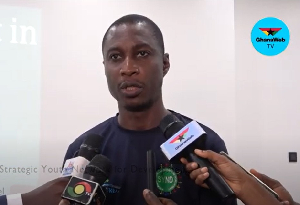 Chibeze Ezekiel is SYND's Executive Coordinator