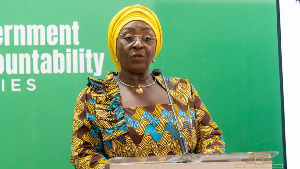
Financial economist and policy analyst Dr Razak Kojo Opoku has praised the growth of the KGL Group, describing the company's expansion as a positive development for Ghana's economy.
In a social media post, Dr Opoku argued that the growth in KGL's size and revenue could have significant benefits for the country, particularly through increased payments to the National Lottery Authority (NLA) and the Ghana Revenue Authority (GRA).
He said the government stood to benefit from higher commissions and tax revenues generated by the company's operations, with further gains expected in 2027 and beyond.
Beyond its financial obligations to the state, Dr Opoku noted that KGL had invested in key socio-economic sectors, including sports and entertainment.
“Despite the negative publicity generated against KGL, the business continues to grow in 2026 through the HAND OF GOD ALMIGHTY. As a result, the REPUBLIC, through the NLA and GRA, stands to benefit even more from the NLA–KGL deal in 2027 and beyond,” he wrote.
Dr Opoku also commended President John Dramani Mahama for what he described as his decision not to yield to pressure from media outlets calling for the termination of the agreement between KGL and the NLA.
He praised the President's handling of the matter, describing his approach as “right, fair and just”.
“Kudos to President John Mahama for acting in a manner considered RIGHT, FAIR, and JUST regarding the NLA-KGL deal. For the information of FALSE ESTATE who advocated for the IMMEDIATE ABROGATION of the deal, the NLA-KGL deal has COME TO STAY with MORE BENEFITS to the REPUBLIC,” he stated.
The NLA-KGL agreement has attracted public debate, with some media outlets calling for its termination over concerns surrounding the arrangement.
However, rather than abrogating the contract, President Mahama directed a review of the agreement to ensure that the interests of all parties were adequately protected.
In April 2026, the Ghana Revenue Authority received GH¢153.21 million in corporate income tax from the KGL Group as part of efforts to improve voluntary tax compliance and boost domestic revenue mobilisation.
Dr Opoku maintained that the agreement had delivered benefits to the parties involved and argued that its continued implementation would generate further gains for the country.
Business News of Friday, 30 October 2026
Source: www.ghanaweb.com
Dr Razak Opoku praises Mahama over handling of NLA-KGL deal
 Financial economist and policy analyst Dr Razak Kojo Opoku