Ghana is right to court foreign investment. The delegation that represented the country at the just-concluded 2026 joint IMF/World Bank Group meetings in Thailand was justified in seeking commercial investment, concessional financing and partnerships capable of accelerating economic recovery and structural transformation.
A country with Ghana’s infrastructure deficits, industrial ambitions and employment challenges cannot afford to turn its back on international capital.
But attracting foreign investment should not become an end in itself. Ghana’s recent economic history offers compelling reasons to reconsider the balance between foreign and domestic capital, and to make mobilizing the latter a far greater national priority.
The economic crisis that erupted in 2022–23 demonstrated the dangers of excessive dependence on foreign portfolio debt. When international investors lost confidence, capital became more expensive, refinancing opportunities contracted and Ghana’s access to external markets deteriorated. The consequences were devastating: debt restructuring, fiscal distress, pressure on the cedi and substantial losses for domestic investors.
That experience should have taught us that capital which can leave a country at short notice is an inherently precarious foundation for economic development. Yet the lesson extends beyond sovereign borrowing. Foreign direct investment, although generally more stable and potentially transformative, also carries long-term foreign-exchange obligations.
Profitable foreign-owned enterprises are entitled to repatriate dividends. But the resulting outflows can place substantial pressure on Ghana’s foreign-exchange market, particularly when corporate earnings are transferred abroad in concentrated periods, particularlythe second quarter of the year.
The initial inflow of investment capital must therefore be assessed against the subsequent stream of foreign currency that the investment may require Ghana to provide.
This is not an argument against foreign direct investment. Ghana needs foreign investors who bring technology, expertise, access to international markets and productive capacity that domestic enterprises cannot readily supply. The question is whether the country is doing enough to develop domestic capital as a complementary, and in some sectors alternative, source of investment.
The contrast is striking. Ghana’s pension funds alone reportedly hold more than GH¢60 billion in investible assets. Much of this institutional liquidity is channeled into government securities and Bank of Ghana instruments. Such investments may be necessary for portfolio safety, liquidity management and financial stability. But an economy cannot indefinitely finance its development ambitions principally by circulating domestic savings between public-sector balance sheets.
A portion of these funds should be mobilized, prudently and transparently, into productive enterprises, infrastructure, industrial expansion, housing, agriculture and commercially viable public-private partnerships. This requires credible investment opportunities, stronger project preparation, appropriate risk-sharing arrangements and safeguards that protect pension contributors. It also requires capital-market instruments that allow institutional investors to finance productive activity without being forced to assume unacceptable risks.
Government’s current caution about returning prematurely to dollar-denominated foreign portfolio borrowing is therefore sensible. The same prudence should inform its approach to foreign investment more broadly. Rather than indiscriminately celebrating every announced investment commitment, policymakers should assess the additional productive capacity created, the foreign-exchange implications, the domestic employment and supplier linkages, and the eventual repatriation obligations.
Ghana needs foreign capital, but it must not neglect the capital it already possesses. The ultimate objective should be an investment economy in which domestic savings finance a much larger share of development, while foreign investment supplements those resources where it brings distinctive benefits.
The most successful investment diplomacy will not simply persuade outsiders to put money into Ghana. It will help create an economy in which Ghanaians themselves have the confidence, institutions and financial instruments to invest productively in their own future.
Business News of Friday, 23 October 2026
Source: economytimesnews.com
Ghana must look beyond foreign investment and put local capital to work - Report
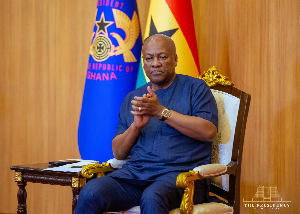 President John Dramani Mahama



Entertainment