Ghana’s delegation to the 2026 Annual Meetings of the International Monetary Fund (IMF) and the World Bank Group from October 12 to 18, led by Finance Minister Dr Cassiel Ato Forson, has hit the ground running. The first two days of the meetings have seen the delegation pursuing bilateral discussions and holding investor briefings and engagements with development partners.
As of October 13, the focus of Ghana’s engagements has reportedly been on investment mobilization, discussions with international financial institutions and investor outreach. Although no newly signed financing package, concluded investment agreement or a fresh country-specific commitment from the IMF or World Bank has been announced from the first two days of the meetings, progress has reportedly been made as bilateral negotiations and investor discussions may take place privately, with formal announcements following later.
The remainder of the October 12–18 programme offers further opportunities for engagement, including ministerial discussions, development-financing debates and meetings on private-capital mobilization.
Ghana has taken its campaign for investment, development financing and international economic partnerships to the meetings. The mission comes at a pivotal moment for the Ghanaian economy, with the government seeking to consolidate the gains from its economic stabilization programme and establish a new foundation for growth, industrial development and job creation.
The immediate objective is to attract investors and development partners willing to finance priority sectors of the economy, while using bilateral engagements with the Bretton Woods institutions to advance Ghana’s economic reform agenda.
The meetings also provide an opportunity to build international support for the government’s proposed New Economy programme, which Dr Forson is expected to outline in greater detail in the 2027 Budget and Economic Statement scheduled for presentation to Parliament in November.
Bank of Ghana Governor Dr Johnson Pandit Asiama is accompanying the Finance Minister, alongside senior officials from the Ministry of Finance and the central bank. Their participation reflects the dual priorities of mobilizing investment and maintaining macroeconomic stability as Ghana seeks to move beyond the financial and economic difficulties that culminated in its 2022 crisis.
Investment mobilization tops Ghana’s agenda
The delegation is seeking investment and financing opportunities to support the New Economy agenda, with engagements involving international investors, financial institutions and development partners taking place alongside the formal meetings.
The central task is to translate Ghana’s improving macroeconomic position into concrete financing for productive investment. The government needs capital to support infrastructure, industrialization, export development, private-sector expansion and employment creation without undermining the fiscal discipline required to preserve economic stability.
The Bangkok mission is therefore expected to serve several purposes: communicating Ghana’s economic recovery to international investors, identifying financing opportunities for priority projects, strengthening relationships with multilateral development institutions and securing confidence in the government’s medium-term policy direction.
For the Ministry of Finance, the New Economy agenda provides an important framework for these discussions. making the annual meetings an opportunity to build partnerships ahead of the programme’s fuller unveiling during the 2027 budget presentation.
Governor Asiama has also identified investor outreach as a major objective. Ahead of the meetings, he said Ghana would use the gathering to court investors and development partners, with officials from the Finance Ministry and the central bank expected to brief investor groups on developments in the economy.
Such engagements matter because Ghana’s recovery must ultimately be sustained by renewed private investment, stronger export capacity and growth in productive activity, rather than depending primarily on fiscal adjustment and favourable external conditions.
IMF programme transition and fiscal discipline
A key issue underpinning Ghana’s discussions is the transition from its completed IMF Extended Credit Facility (ECF) programme to a new phase of economic management under a 36-month Policy Coordination Instrument (PCI).
Unlike the ECF, the PCI does not provide financing. Its importance lies in helping Ghana maintain a credible policy framework, demonstrate continued commitment to reforms and reassure investors and development partners that the gains achieved during the adjustment programme will not be reversed.
The IMF’s assessment identified several priorities for the new phase, including stronger domestic revenue mobilisation, better public financial management, improved oversight of state-owned enterprises, financial-sector resilience and continued reforms in governance.
It also established a medium-term debt anchor of 45 per cent of gross domestic product by 2034. Ghana’s 2026 budget targets a primary surplus of 1.5 per cent of GDP, while the IMF indicated that a lower primary surplus from 2027 could be compatible with debt sustainability if supporting reforms continue.
These issues are relevant to Ghana’s Bangkok mission because international investors will be assessing not only the country’s recent improvements but also its ability to maintain fiscal discipline, manage public debt and sustain economic growth over the longer term.
The immediate challenge is to create enough fiscal space for development priorities without compromising debt sustainability. The government will also need to demonstrate that it can mobilise private capital and improve the effectiveness of public investment.
Ghana seeks a stronger voice in global financial reform
Beyond country-specific financing opportunities, Ghana is using its international engagements to advocate reforms to the global financial architecture.
Dr Asiama said in September that Ghana was pursuing a multilateral approach to reforming the international financial system, working with other developing countries to address weaknesses in the treatment of debt vulnerabilities, climate financing and inequality.
On October 13, a Reuters report from Bangkok said the Group of 24 (G24), chaired by Nigeria’s Finance Minister Taiwo Oyedele, was calling for more accessible and concessional financing for vulnerable developing countries. The group highlighted the growing burden of debt servicing and the pressure that expensive borrowing places on public finances and investment in development.
Although the G24 position is not a Ghana-specific agreement, it reflects a broader concern that Ghana shares with other developing economies. For Ghana, progress on this front could mean improved access to affordable development financing, stronger mechanisms for managing sovereign debt distress and greater consideration of the circumstances facing emerging economies in international financial decision-making.
Global risks complicate the mission
The delegation is conducting its investment campaign against a difficult international economic backdrop.
The Bangkok meetings are addressing debt pressures, energy security, geopolitical fragmentation, climate change and the implications of artificial intelligence for productivity, employment and economic competitiveness.
The IMF has warned that the resilience of the global economy may be weakening as countries confront higher borrowing costs, energy-price pressures and the consequences of geopolitical conflicts.
These developments have direct implications for Ghana. Higher international energy prices can increase import costs and inflationary pressures, while rising global interest rates can make external borrowing more expensive.
At the same time, disruptions to international trade and investment flows could affect demand for Ghanaian exports and the availability of capital for new projects.
Consequently, the government must balance its efforts to attract foreign investment with the need to protect macroeconomic stability. It will also need to demonstrate that Ghana offers a credible and predictable environment for long-term investors.
Business News of Wednesday, 14 October 2026
Source: businesspostonline.com
Government seeks investment and financing deals at ongoing IMF-World Bank meetings
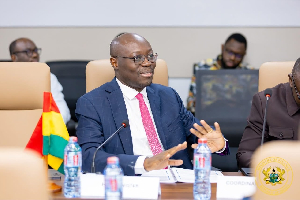 Dr Cassiel Ato Forson is the Minister of Finance