The private sector must take a leading role in Ghana’s economic diplomacy if the country is to translate its trade agreements and economic opportunities into sustainable growth and shared prosperity.
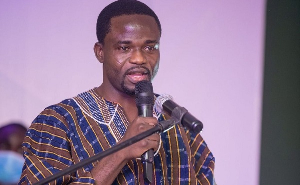
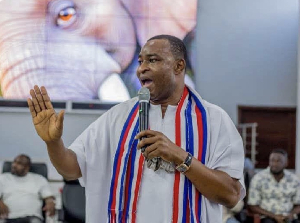
Dr Daniel Augustus Lartey Jnr, the 2024 Presidential Candidate for the Great Consolidated Popular Party (GCPP), made the call at a forum in Accra, where he emphasised the need for stronger collaboration between government and businesses to advance Ghana’s economic interests.
He said Accra, as the host city of the Secretariat of the African Continental Free Trade Area (AfCFTA), provides an appropriate platform for discussions on economic diplomacy and the critical role of the private sector in driving economic transformation.
According to Dr Lartey, economic diplomacy cannot succeed through government action alone, as businesses are central to trade, investment, innovation and the creation of jobs.
He said Ghana could not build lasting prosperity by continuing to export raw materials and import finished products.
He therefore urged Ghanaian businesses to invest more in processing the raw materials they produce and develop competitive supply chains capable of serving markets across Africa.
Dr Lartey also called for greater private-sector participation in shaping trade policies.
He encouraged Chambers of Commerce, manufacturers and trade associations to bring their practical experience to policy discussions, particularly on challenges such as customs delays and high trading costs.
He noted that businesses were often best placed to identify the practical barriers that make cross-border trade difficult and could therefore contribute significantly to finding workable solutions.
Dr Lartey stressed that the active involvement of the private sector was necessary to translate trade agreements into concrete investments and economic opportunities.
He further challenged Ghanaian firms to position themselves as credible partners by embracing innovation and maintaining high standards of integrity.
Such an approach, he said, would help attract strategic partnerships in areas including technology, finance, and clean energy.
While calling for greater private-sector leadership, Dr. Lartey said government also had an important responsibility to create the conditions necessary for businesses to thrive.
He called for stable and predictable policies, efficient ports, and a fair business environment to give both domestic and international investors the confidence to establish and sustain their operations in Ghana.
The media, he added, had a significant role to play in promoting Ghanaian enterprise by telling the success stories of local businesses while also holding policymakers accountable when policies create unnecessary obstacles for businesses.
Dr Lartey said the changing global trading environment and the expansion of African markets presented Ghana with an opportunity to move beyond rhetoric and fully exploit its economic potential.
“African markets are opening and global trade is changing. This is Ghana’s moment to move from promise to productivity, from agreements to investments, and from opportunity to shared prosperity,” he stated.
AM
Inside Ghana’s Abandoned Engineering Powerhouse: What Went Wrong?
Business News of Wednesday, 30 September 2026
Source: www.ghanaweb.com
Private sector must lead Ghana's economic diplomacy - Dr Augustus Lartey Jnr
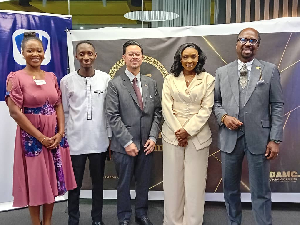 Dr Daniel Augustus Lartey Jnr among other stakeholders