The founder of Africa World Airlines (AWA), Togbe Afede XIV, has explained why domestic airfares in Ghana remain high.
According to him, the high fares can be attributed to foreign exchange costs, customs duties, low passenger numbers and limited airport operating hours.
He said the challenges faced by local airlines make it difficult to directly compare their fares with prices charged for similar distances in Europe and the United States.
AWA credits government duty exemption as it welcomes new E190 aircraft
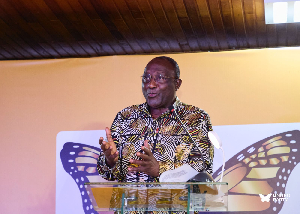
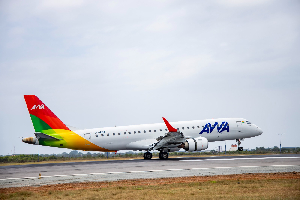
Togbe Afede made the comments in a speech delivered on his behalf by Yvonne Botchwey, Managing Director of the World Trade Centre, Accra, during the arrival of AWA’s first E190 aircraft on Saturday, September 19, 2026.
He said domestic airlines operate in the same global market for many inputs as foreign carriers but face different conditions in Ghana.
“While our local airlines compete with their foreign counterparts in the same factor markets, the product market conditions differ, with the domestic airlines having to deal with more difficult local conditions,” he said.
According to him, most of the inputs used by domestic airlines are imported, resulting in foreign exchange and customs duty costs.
He also said passenger numbers on domestic routes do not allow airlines to operate their aircraft at full capacity.
“Most of the inputs in the domestic aviation sector are imported, with foreign exchange and customs duty implications; passenger numbers do not allow for maximum aircraft utilisation; and local airport operating hours limit aircraft utilisation in many cases,” he said.
Togbe Afede XIV said these factors put pressure on the operations of domestic airlines and affect their profitability.
He said low passenger numbers also make it difficult for airlines to establish direct connections between many African countries.
“Limited passenger numbers are the main reason why there are no direct flight connections between most African countries. This explains why you often have to go through Europe when travelling between two African countries,” he explained.
He further pointed to the difficult history of the domestic aviation industry in Ghana as evidence of the challenges facing operators.
“When AWA commenced business in 2012, there were already several domestic airlines, none of which has survived. Ghana’s two attempts at operating national airlines have ended in failure. These are all evidence of the difficult nature of the aviation business and the domestic aviation environment,” he said.
AWA announces new launch date for Accra-Ouagadougou route
Togbe Afede said AWA only paid its first dividend in 2025, after 13 years of flight operations.
He therefore appealed for continued support for domestic airlines as they work to expand their operations.
“The difficulties inherent in the business are the reasons why we need the support of all of you, including our customers, if we are to achieve our objective of supporting the growth of our country and our continent,” he added.
MAG/MA
Business News of Saturday, 19 September 2026
Source: www.ghanaweb.com