Ghana’s 6% economic growth is failing to generate enough jobs to absorb its expanding labor force, leaving government’s 800,000-job target confronting a market that receives more than 500,000 new entrants every year.
The World Bank’s 10th Ghana Economic Update says the economy recorded its fastest growth since 2019 in 2025, but employment has not expanded sufficiently to match the pace of economic recovery.
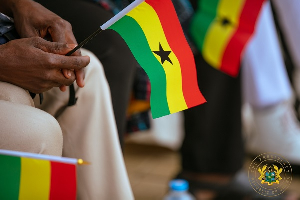
Real Gross Domestic Product (GDP) expanded six percent in 2025 and remained strong at 6.4% in the first quarter of 2026, supported by increased activity across services, agriculture and industry.
The stronger output has yet to produce a corresponding improvement in the labor market.
Ghana’s unemployment rate stood at about 13% in the third quarter of 2025, while unemployment among people aged 15 to 24 remained above 32%. About 7 out of every 10 unemployed people were below the age of 35.
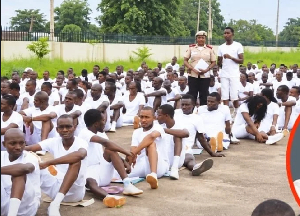
More than 500,000 young people are estimated to enter Ghana’s labor market annually, requiring the economy to create jobs on a large scale simply to absorb new entrants before reducing the existing pool of unemployed people.
The World Bank sees the jobs problem as a major challenge of Ghana’s economic recovery, particularly as the country’s working-age population continues to expand.
Between 2012 and 2023, Ghana’s working-age population increased by about 2.6 million people, while employment increased by a much smaller number. The working-age population is expected to continue rising over the coming decade.
Ghana’s youth population aged 15 to 29 is also projected to approach 11 million by 2030, adding to the number of people who will require employment as they move into the labor market.
Population growth is increasing the number of jobs the economy must create, but the employment pressure also reflects the structure of economic growth and the ability of businesses to absorb additional workers.
Government is attempting to close the gap through a much larger employment programme.
The 2026 Budget targets the creation of up to 800,000 jobs, compared with the 250,000 annual employment target previously associated with government programmes.
If delivered within the planned period, the new target would exceed the estimated 500,000 people entering the labor market annually and provide room to absorb part of the existing unemployed population.
About 490,000 jobs are expected from GH¢63 billion worth of road contracts under the Big Push infrastructure programme, while the National Policy on Integrated Oil Palm Development is expected to create more than 250,000 jobs across the value chain.
More than 20,000 additional direct jobs are expected from three garment factories.
The Big Push and oil palm programmes alone account for about 740,000 jobs, representing more than 92% of the headline employment target.
Meeting the 800,000 target will therefore rest heavily on the execution of infrastructure projects and the rollout of the oil palm programme.
The size of the population already outside employment also shows how much ground has to be covered.
About 1.34 million people aged 15 to 24 were neither in employment, education nor training in the third quarter of 2025. Among people aged 15 to 35, the number was about 1.95 million, according to Ghana Statistical Service figures.
Youth unemployment among people aged 15 to 24 averaged about 32.5% in the second and third quarters of 2025, while unemployment among those aged 15 to 35 stood at about 21.9%.
The numbers were considerably higher in Greater Accra, where unemployment among economically active people aged 15 to 24 reached 49.3% in the third quarter of 2025.
Competition for available formal jobs has consequently remained intense.
A recent public-sector recruitment exercise attracted approximately 500,000 applications for about 5,000 positions, according to President John Mahama, leaving roughly 100 applications for every available position.
The labor-market problem is not limited to unemployment.
Nearly 60 percent of young workers remain in vulnerable employment, while the informal sector’s share of youth employment increased from 32% in 2015 to 43% in 2024. Only about one in 10 young workers held high-skilled jobs, down from 14% in 2015.
Ghana consequently has to create jobs for people already unemployed while producing enough additional employment to accommodate more than half a million new labour-market entrants every year.
The 800,000-job programme provides government with a substantially larger employment target than previous programmes, but its effect on unemployment will be determined by how quickly the promised jobs materialize and how many represent sustained employment rather than temporary work attached to individual projects. The pressure will continue to rise as Ghana’s working-age population expands.
A larger labor force can support faster production, investment and consumption when workers are employed, but continued growth in the number of people seeking work without a similar increase in employment would add to competition for available jobs and leave more labour outside productive activity.
Ghana’s return to 6% economic growth has therefore strengthened output, but reducing unemployment will require job creation to begin matching both the pace of economic expansion and the more than 500,000 people entering the labor market each year.
Business News of Friday, 4 September 2026
Source: economytimesnews.com
Ghana's 6% growth fails to deliver enough jobs - World Bank
 Real Gross Domestic Product (GDP) expanded 6%