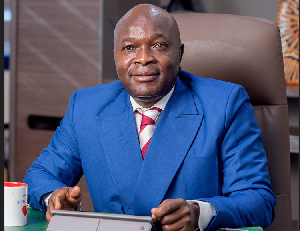
A research analyst at the Institute of Statistical, Social and Economic Research (ISSER), Professor Charles Ackah, has warned that Ghana could take up to 70 years to become an upper-middle-income country if its current long-term economic growth trend continues.
Speaking in an interview on Channel One TV on Wednesday, August 5, 2026, Professor Ackah explained that Ghana’s average annual growth in income per person over the past 65 years has been too slow to support rapid economic transformation.
He noted that Ghana has recorded an average annual per capita GDP growth rate of only 1.15%, which is significantly lower than the rates achieved by many fast-growing economies over the same period.
Government moves to formalise waste transfer stations
“I compared almost all the countries. I took the average per capita GDP over the last 65 years and averaged it per annum. This is a very good indicator of performance,” he said.
According to Professor Ackah, many countries that have successfully transformed their economies have maintained much higher long-term growth rates.
“Over the last 65 years, Ghana has managed just about 1.15% per annum growth per capita. GDP is not doing well. If you compare it to other countries, they are doing 6.6%, about 5%, 4%, 3%. You need that to be able to move your economy within the next 20 to 25 years onto a high-income status,” he said.
Prof. Ackah said Ghana has experienced periods of strong economic growth, including years when GDP growth exceeded 11%, but those gains have not been sustained enough to significantly improve the country’s long-term average.
He warned that if the current pace of growth continues, Ghana’s transition from a lower-middle-income country to an upper-middle-income country will remain slow.
“With that kind of growth, it will take you a generation, like 70 years, before you move from a lower-middle-income country to an upper-middle-income country,” he stated.
Professor Ackah cited China and Botswana as examples of countries that achieved sustained economic progress through strong long-term growth.
He said China recorded an average annual per capita growth rate of 6.6% over the same period, while Botswana averaged about 4.77% by making effective use of its natural resources. He added that Botswana’s long-term growth even exceeded that of Hong Kong.
Professor Ackah also noted that Ghana’s GDP per capita, measured by purchasing power parity (PPP), stood at about 8,000 international dollars in 2024, below the average of roughly 10,000 international dollars for lower-middle-income countries.
In comparison, China and South Korea have reached about 38,000 international dollars and 61,000 international dollars, respectively.
He further pointed out that at independence in 1960, Ghana’s GDP per capita stood at about US$176, while South Korea’s was about US$158, indicating that the two countries started at relatively similar levels but have since taken markedly different economic paths.
ANAS/MA
Ghana's recovery due to superior economic management - Ato Forson
Business News of Thursday, 6 August 2026
Source: www.ghanaweb.com
Ghana's economic growth too slow to drive rapid transformation - Prof Ackah
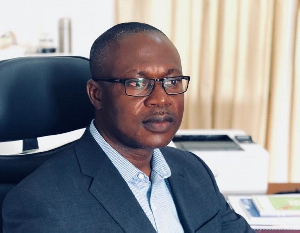 Professor Charles Ackah is a researcher at ISSER