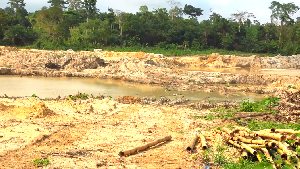
The announcement by COCOBOD, Ghana’s cocoa sector regulator, that production for the impending crop seasons could drop significantly—by roughly 16 percent, down to between 450,000 and 550,000 metric tons, from 750,000 projected for the 2025/6 season – has sent global market prices for cocoa surging upward..
Global cocoa prices on New York’s commodity market rose by 7.4 percent (gaining about US$380) to settle at US$5,490 per metric ton on July 31, 2026, immediately following COCOBOD’s official confirmation. Simultaneously, London cocoa futures surged 6.9 percent to close the week at £4,074 per metric ton.
By the morning of Monday, August 3, global cocoa futures were trading near US$5,664 per metric ton for New York contracts and around £4,009 per ton for London contracts, driven higher over the past few days by the announcement from COCOBOD.
Ghana’s upcoming production shortcomings are being attributed to the combined effects of swollen shoot disease, aging cocoa farms, and the likelihood of adverse weather from the El Niño weather pattern.
Prior to the latest announcement, cocoa prices had been under downward pressure over the past two weeks and posted four-week lows on Tuesday last week (July 28) on signs of larger global cocoa supplies amid uncertain demand.
The previous day’s cumulative data from the Cote d”Ivoire showed that farmers shipments of cocoa to ports in the current marketing year (October 1, 2025, through July 26, 2026), were up 21% from the same period a year ago. Also, Bloomberg reported on July 16 that Nigerian cocoa exports in June rose 30 percent year on year to 18,922 MT.
But poor pod counts, swollen shoot disease, aging trees, and illegal mining (galamsey) in major producing areas like Ghana’s Western and Western North regions triggered aggressive short-covering and a 5 percent to 6 percent single-day price surge heading into the weekend.
Market anxiety over deteriorating West African crop conditions has forced trade houses and analysts to slash forecasts for the global cocoa surplus, providing renewed upward momentum to prices after a brief mid-summer price decline. StoneX on Wednesday, July 29, cut its 2026/27 global cocoa surplus estimate to 25,000 MT from a forecast of 149,000 MT in April, citing risks to the West African cocoa crop from an expected El Niño.
Lower cocoa production in Ghana during the 2026/27 crop season is likely to produce a paradox for Ghanaian cocoa farmers, who are now guaranteed, by newly passed legislation, 70 percent of the free on board global price of their cocoa, Higher global cocoa prices will improve the value of the crop they do harvest, but many farmers will still earn less overall because they have fewer beans to sell. The net effect will vary considerably between farmers depending on their yields, farm size, disease incidence and the government’s producer price policy.
The anticipated reduction in Ghana’s crop comes at a time when neighbouring Côte d’Ivoire is also expecting a weaker harvest. Since the two countries together account for well over half of global cocoa production, traders have already begun pricing in tighter global supplies, supporting international cocoa prices.
The late-July price surge breaks a brief summer cooling period. It proves that structural constraints, such as Ghana’s widespread Swollen Shoot virus, illegal gold mining (galamsey), and heavy rainfall, continue to prevent the market from returning to cheaper pre-2024 levels of less than US$3,000 per ton.
While prices remain well below the all-time historic spikes of early 2024 (which exceeded US$12,000), the fresh supply shocks mean global cocoa continues to trade at nearly double its historical decade-long baseline average
Some cocoa farmers stand to gain but others may lose
Farmers whose farms escape severe disease or weather damage could enjoy substantially higher incomes.
If international prices continue to strengthen because of anticipated supply shortages, COCOBOD will have greater room to increase Ghana’s producer price at the start of the season, assuming its financial position allows it to pass more export earnings on to farmers.
Such farmers would benefit through higher revenue per bag sold, improved profitability if input costs remain relatively stable, better ability to rehabilitate ageing farms and increased capacity to invest in fertilizer, improved seedlings and farm maintenance.
This could particularly benefit efficient producers with younger plantations or farms that have already undergone rehabilitation.
However, for a large proportion of farmers, production losses are likely to outweigh any price gains. For instance a farmer harvesting 100 bags last season but only 80 bags this season suffers a 20 percent production decline. So if the producer price rises by 10-15 percent, total revenue would still be lower because the increase in price does not fully offset the reduction in output.
Since most cocoa farmers’ production costs, labour, farm maintenance, pesticides and transport, do not fall proportionately with production, net incomes could decline even further.
Besides, unlike farmers in liberalized commodity markets, Ghanaian cocoa farmers do not receive the full benefit – or peril – of daily movements in international prices.
COCOBOD purchases cocoa at a government-announced producer price that normally remains fixed throughout the crop season, although pricing is periodically reviewed and reset during the crop year to reflect sharp fluctuations or downturns in international market prices and local liquidity
This system protects farmers from sudden collapses in world prices, but it also means they do not immediately capture windfall gains when international prices surge.
Consequently, although futures prices are already responding to expectations of lower West African production, Ghanaian farmers will benefit only to the extent that government adjusts the producer price upward.
On the other hand if international cocoa prices remain elevated throughout the season and COCOBOD performs strongly in export sales, farmers could potentially receive larger end-of-season bonuses than during years of depressed world prices.
However, these would depend on export contract performance, COCOBOD’s debt-servicing obligations, exchange rate developments and government policy.
The production outlook highlights the growing divergence between rehabilitated and neglected cocoa farms.
Farmers who have replanted ageing trees, controlled swollen shoot disease, adopted improved agronomic practices and maintained adequate fertilizer application are likely to outperform the national average and benefit disproportionately from higher prices.
Meanwhile, farmers whose farms have suffered severe disease or have lost land to illegal mining may experience declining incomes despite the stronger international market.
The fate of the State
Reduced national production means fewer exportable beans.
This could affect COCOBOD’s export earnings, government’s foreign exchange receipts, resources available for producer support programmes and financing for farm rehabilitation and extension services.
Lower crop volumes also increase unit marketing costs because fixed operational expenses are spread over fewer tons.
However, one positive development could be a reduction in cross-border smuggling if Ghana raises its producer price sufficiently to narrow historical price differences with neighbouring countries.
Better farm gate prices would strengthen incentives for farmers to sell through licensed buying companies rather than informal channels.
Longer-term implications
The current situation reinforces an important lesson for Ghana’s cocoa sector. Sustained improvements in farmer welfare will depend less on temporary price spikes than on raising productivity through accelerated replacement of ageing cocoa trees, expanded disease-control programmes and wider access to fertilizer and extension services. The desired improvements would also depend on stronger action against illegal mining on cocoa lands and the use of climate-resilient farming practices.
If these structural constraints are addressed, future periods of high global prices would translate into significantly larger income gains for farmers because they would have more cocoa to sell.
In short, higher world cocoa prices will cushion, but probably not completely offset, the income impact of Ghana’s expected 16% production decline. Farmers with healthy, productive farms could enjoy one of their better income years in recent times, while those experiencing severe yield losses from disease, adverse weather or galamsey are likely to see overall earnings fall despite a more favourable global price environment.
Business News of Wednesday, 5 August 2026
Source: businesspostonline.com
Global market cocoa prices surge
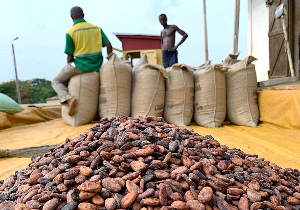 Cocoa is a key export commodity for Ghana