Nearly seven out of every 10 Ghanaians who interacted with public officials during the second half of 2025 were asked to make unofficial payments for services they were entitled to receive, according to the latest Governance Series Wave 3 Report released by the Ghana Statistical Service (GSS).
The report, launched in Accra, paints a mixed picture of governance in Ghana, showing a sharp increase in requests for bribes during the latter half of 2025 even as annual data points to a gradual decline in actual bribery payments and growing public resistance to corruption.
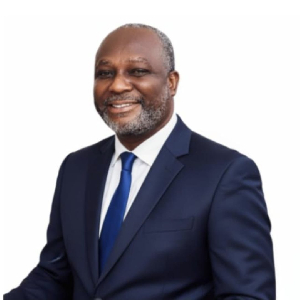
Launching the report, Government Statistician Dr. Alhassan Iddrisu said the findings highlight the persistence of corruption within public institutions and underscore the need for targeted reforms.
“Out of every hundred Ghanaians who walked up to a public official in the last six months of 2025, 69 were asked to pay something extra for a service they had already earned, a right that was already theirs,” he said.
The Governance Series, which covers all 16 regions, tracks citizens’ experiences with public institutions using a nationally representative panel drawn from the 2021 Population and Housing Census. The latest report covers the period from July to December 2025.
Bribery worsens in second half
According to the report, corruption indicators deteriorated during the second half of 2025 compared with the first six months of the year.
The proportion of citizens who reported paying a bribe increased from 14.3 percent between January and June 2025 to 18 per cent during the July to December period.
Similarly, requests for unofficial payments surged from 51 percent to 69 percent over the same period.
“The pressure sits at the counter. The problem now is less what citizens offer and more what officials ask,” Dr. Iddrisu observed.
Despite the increase in requests for bribes, the report also identified encouraging signs.
The proportion of respondents who said they paid bribes five or more times declined sharply from 24 per cent in Wave 2 to less than four per cent in Wave 3.
Likewise, the percentage of citizens who refused to pay unofficial charges increased from three per cent to 4.9 percent.
“This implies more citizens are looking across that counter and saying, ‘I will not pay for what is already mine,'” he noted.
Annual trend improves
While the six-month comparison showed worsening conditions, the broader comparison between 2024 and 2025 revealed signs of improvement.
Interactions between citizens and public officials increased substantially, rising from 56 percent in 2024 to 72 per cent in 2025, representing about 1.6 million additional interactions.
Despite the increase in contact with public institutions, the proportion of citizens who reported paying bribes fell from 18.4 percent in 2024 to 16.8 percent in 2025.
The report also found that high-value bribe payments exceeding GH¢1,000 almost halved, dropping from 14.7 percent to 7.6 percent.
“Exposure went up; bribery went down. That gap is the good news,” Dr. Iddrisu said.
Police remain highest-risk institution
The survey identified the Ghana Police Service, particularly the Motor Traffic and Transport Department (MTTD), as the public institution most frequently associated with bribery.
More than half of respondents who interacted with MTTD officers reported giving gifts or making unofficial payments.
However, the incidence declined from 61 percent in 2024 to 53.6 percent in 2025.
Dr Iddrisu said corruption remains concentrated in a relatively small number of institutions that have frequent public interactions.
“Fix a few high-contact and high-bribery institutions and you change the national picture,” he stressed.
Citizen participation improves
Beyond corruption, the report also assessed citizens’ perceptions of participation in governance.
The findings showed improvement, with the proportion of Ghanaians who felt they had no influence over decisions affecting their lives falling from 42 percent in 2024 to 30 percent in 2025.
However, young people, older persons and the unemployed continued to feel more excluded from decision-making than other population groups.
Dr Iddrisu said achieving inclusive governance would require deliberate efforts to amplify the voices of vulnerable groups.
Call for reforms
The Government Statistician urged public institutions to intensify reforms aimed at reducing corruption and rebuilding public confidence.
Among the recommendations contained in the report are wider digitisation of public services, publication of official fees, expansion of online permit systems, stronger protection for citizens who refuse to pay bribes and more effective complaints mechanisms.
He also called for greater transparency in public decision-making and increased efforts to include marginalised groups, including persons with disabilities.
Dr Iddrisu urged government to mainstream governance reforms into national development planning, businesses to insist on official payment channels, citizens to report bribery and civil society organisations and the media to sustain public oversight.
He also acknowledged the role of the Office of the Chief of Staff in engaging public institutions following earlier Governance Series reports to address corruption risks.
The Governance Series is implemented in partnership with the African Centre for Parliamentary Affairs (ACEPA), the Commission on Human Rights and Administrative Justice (CHRAJ), the Ghana Anti-Corruption Coalition, Transparency International Ghana and the PAIRed Programme, with funding support from the Hewlett Foundation.
Describing the report as “a mirror of how citizens are treated, a compass pointing to where action is most needed and a catalyst for reforms,” Dr Iddrisu said measuring governance outcomes remains essential to improving public service delivery and strengthening accountability in Ghana.
Business News of Wednesday, 5 August 2026
Source: businesspostonline.com
69% of Ghanaians asked for unofficial payments by public officials in 2025 – GSS
 Similarly, requests for unofficial payments surged from 51% to 69% over the same period