Ghanaian business mogul Richard Nii Armah Quaye has marked the first anniversary of the RNAQ Food Bank initiative, which says it has served more than three million meals through a network of food distribution centres across the country over the past 365 days.
The milestone comes as concerns about food insecurity continue to affect many low-income households and vulnerable groups in Ghana. What began as a pilot programme with three centres in Korle Gonno, Kasoa and Ashaiman has expanded into a network of 13 branches operating in several regions.
According to the RNAQ, the food bank was established to provide consistent access to meals for individuals and families facing economic hardship. The initiative was inspired by Quaye’s childhood experiences in Korle Gonno, where access to regular meals was often uncertain.
Since its launch, the programme has focused on providing daily food support rather than periodic charitable donations. The foundation says this approach was designed to create a more reliable system for addressing hunger and food insecurity in communities.
Over the past year, the food bank has expanded beyond Greater Accra into other parts of the country, including the Central, Bono East, Ashanti and Northern regions. One of its largest expansion efforts took place in Kumasi, where four centres were opened simultaneously in Bantama, Asafo, Anloga and Alabar.
The network’s latest branch was opened in Techiman, a major agricultural and trading centre in the Bono East Region, bringing the total number of operational centres to 13.
To commemorate the one-year anniversary, the foundation has planned activities for beneficiaries across its branches while reflecting on the impact of the programme on communities that rely on its services.
Observers say the initiative highlights the growing role of private-sector-led social interventions in addressing national challenges such as hunger and food insecurity.
As demand for social support continues to rise, programmes that provide consistent access to food are increasingly being viewed as an important complement to government and community efforts aimed at improving livelihoods.
Business News of Tuesday, 4 August 2026
Source: thebftonline.com
Ghanaian business mogul RNAQ's food bank records 3 million meals served in one year
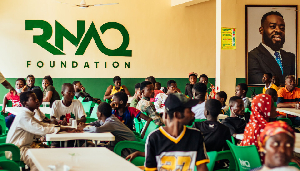 Some of the beneficiaries at the eatery joint