The Integrated Social Development Centre (ISODEC) has welcomed the government’s decision to abolish several taxes but raised concerns over the lack of transparency surrounding the GH¢30 billion Big Push Infrastructure Programme and Ghana’s planned transition to a new IMF Policy Coordination Instrument (PCI).
In its assessment of the 2026 Mid-Year Fiscal Policy Review issued on Tuesday, August 4, 2026, ISODEC commended the government for abolishing the E-Levy, Betting Tax, COVID-19 Health Recovery Levy, and Emissions Levy.
The civil society organisation said the tax reliefs represented important measures that it had advocated for over the years.
ISODEC also welcomed reported improvements in Ghana’s macroeconomic indicators, citing real GDP growth of 6.4% in the first quarter of 2026 and a reduction in the debt-to-GDP ratio to approximately 45%.
DVLA to scrap registration year on new number plates
It said the government’s assertion that the removal of the E-Levy did not weaken revenue but instead strengthened it vindicated its long-standing position that broad-based and regressive levies could harm economic activity without delivering the intended fiscal benefits.
However, ISODEC said several of its concerns regarding fiscal transparency and economic sovereignty remained unresolved.
The organisation said the GH¢30 billion Big Push Infrastructure Programme remained insufficiently transparent, with only GH¢6.5 billion, representing about 22% of the annual allocation, disbursed by the halfway point of the year.
ISODEC said the government had not provided adequate project-level information, including the locations of projects, contracts awarded, and implementation plans.
It warned that the lack of information could create risks of misallocation and leakages, particularly if the programme expands while implementation remains slow.
ISODEC also raised concerns over Ghana’s planned transition from the IMF Extended Credit Facility to a Policy Coordination Instrument.
The organisation criticised the absence of parliamentary review of the proposed arrangement and argued that the PCI could constrain Ghana’s policy choices despite being a non-financing programme.
ISODEC is therefore calling for an independent parliamentary review of the potential impact of the PCI on Ghana’s fiscal autonomy before the arrangement is finalised.
The organisation said the government had also failed to adopt some of its proposed alternatives, including a Functional Finance framework and a National Job Guarantee Programme.
It further criticised what it described as continued reliance on IMF and Eurobond-linked financing, arguing that Ghana should explore alternative financing mechanisms, including the Pan-African Payment and Settlement System (PAPSS) and the African Export-Import Bank.
ISODEC called on the government to immediately publish a detailed list of all Big Push projects, including contracts awarded and clear implementation timelines.
It also urged Parliament to hold a public hearing on the terms of the proposed IMF Policy Coordination Instrument before it is ratified.
While commending improvements in Customs and VAT enforcement, ISODEC called for a specific and costed programme to address illicit financial flows, particularly in the extractive sector.
"Ghana does not need another IMF programme to manage its affairs. It needs the political will to build domestic fiscal capacity and deploy its own resources to benefit its own people," ISODEC said.
MA
Business News of Tuesday, 4 August 2026
Source: www.ghanaweb.com
ISODEC applauds tax reliefs but raises concerns over 'Big Push' transparency
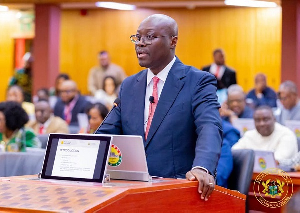 Dr Cassiel Ato Forson, Minister of Finance