President John Dramani Mahama has called for a transformation of Africa's economic model, urging the continent to move away from its long-standing dependence on raw material exports and focus instead on industrialisation, value addition, and wealth creation.
According to him, Africa's future prosperity will depend on its ability to process its resources locally, build competitive industries, and attract investments that create jobs and facilitate technology transfer.
His remarks come at a time when African leaders are increasingly advocating policies that promote local manufacturing and resource beneficiation as a means of accelerating economic growth and reducing dependence on commodity exports.
BoG defends cedi fundamentals, cautions against currency speculation
Speaking at the 12th Africa Debate in London on Wednesday, June 3, 2026, Mahama stressed that the continent's engagement with the global economy must evolve beyond the traditional relationship in which Africa supplies raw materials while other regions reap the benefits of industrial production.
"The future relationship between Africa and the world must be built on value addition, industrialisation, technology transfer, infrastructure investment, skills development, and shared prosperity," he stated.
President Mahama noted that despite ongoing global economic challenges, Africa continues to demonstrate remarkable resilience and remains one of the world's fastest-growing regions.
"Even amid global uncertainty, Africa continues to demonstrate resilience and growth. While many advanced economies struggle with stagnation, Africa remains one of the world's fastest-growing regions," he said.
He also rejected perceptions that Africa is seeking aid or sympathy from the international community, insisting that what the continent needs are strategic partnerships capable of unlocking its economic potential.
"But let me also state clearly: Africa does not seek sympathy," he stressed.
The President argued that the continent possesses vast opportunities across sectors such as agriculture, mining, manufacturing, energy, and technology, which can drive sustainable development if supported by the right investments.
He further cited Ghana as an example of how reforms, leadership, and a clear national vision can drive economic transformation.
"Allow me to present Ghana as evidence that transformation is possible when leadership, reform, and national purpose converge," he said.
ANAS/MA
Navigating a changing global order: Ghana’s strategic priorities
Business News of Wednesday, 3 June 2026
Source: www.ghanaweb.com
Africa needs investment, not sympathy – President Mahama
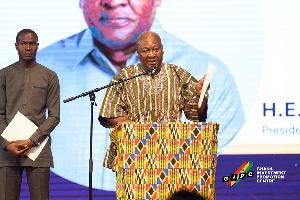 John Dramani Mahama is the President of Ghana