The Minister for Fisheries and Aquaculture Development, Emelia Arthur, has underscored the critical role women play in Ghana’s fisheries sector, stressing the need for greater inclusion and support amid growing challenges confronting the industry.
She was speaking at a community dialogue organised by the Global Fisheries and Resilience Action (GFRA) in collaboration with the Ministry of Fisheries and Aquaculture for women fish processors, traders, chief fishermen and stakeholders at Shama in the Western Region.
It was on the theme “Women Supporting Women: Strengthening Women Inclusion and Opportunities in the Fisheries Sector”. The dialogue focused on challenges facing women in the fisheries industry, identified opportunities for growth and highlighted the need for continuous engagement on supporting women and sustaining the sector.
The minister noted that fisheries remain central to Ghana’s food security and livelihoods.
“In the fishery sector, as we all know, 60 percent of Ghana’s animal protein comes from fish, and that is significant,” she said, adding that about three million Ghanaians depend on the fisheries value chain for survival.
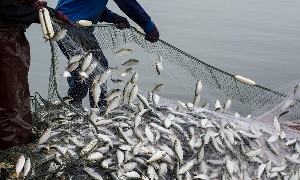
According to her, the majority of people engaged in the fisheries value chain are women, making it imperative to design policies and interventions that support women and create opportunities for them within the sector.
“This engagement is about women supporting women and ensuring inclusion of women in the fisheries sector,” she stated.
The minister said the sector is currently grappling with fish stock depletion caused largely by illegal, unreported and unregulated (IUU) fishing as well as the effects of climate change.
She stressed the need for stronger compliance with fisheries regulations and traditional management practices to help restore declining fish stocks.
As part of measures to strengthen fisheries management, she urged coastal communities to respect traditional fishing holidays, particularly Tuesdays, which have historically been observed as non-fishing days in many coastal communities.
The minister disclosed that district assemblies have been directed to establish fisheries and aquaculture subcommittees and collaborate with chief fishermen and traditional authorities to enact by-laws that make the traditional fishing holiday legally binding.
“If you are caught fishing on Tuesday, which is a traditional fishing holiday, then you will have to answer to the law,” she warned.
The Director for Gender, Youth and Inclusion at the Ghana Fisheries Recovery Activity, Baviina Safia Musah, said declining fish stock and illegal fishing activities are placing severe economic pressure on workers in the sector, particularly women and children.
According to her, fish stocks have continued to decline over the past two decades, worsening hardships for fishing households.
“For women and children, they particularly experience greater vulnerabilities due to all of these changes, and so it is important that we discuss what it means for their welfare and for their families,” she noted.
Ms. Musah explained that GFRA has over the years worked closely with women in the fisheries sector to strengthen their leadership, improve business opportunities and support their organisation within the industry.
“At the end of the day, they are the ones that turn the fish into food and into family income, so it is important that they are part of every fisheries conversation,” she stressed.
She also highlighted the importance of the newly passed Fisheries and Aquaculture Act 2025, saying it contains several provisions aimed at increasing women’s representation within fisheries governance and improving infrastructure development in the sector.
Touching on social challenges within fishing communities, Ms. Musah revealed that declining fish catches are increasing tension in many homes, leading to domestic violence and exploitation.
“There is a lot of pressure and lot of fights beginning to erupt because there are children to take care of,” she said.
She further disclosed that child labour and exploitation of young girls are becoming growing concerns as struggling families seek ways to supplement household income.
“Many children are not able to go to school. For many, it is affecting their health and reducing their opportunities to enjoy life to its fullest,” she lamented.
Business News of Sunday, 31 May 2026
Source: thebftonline.com
Emelia Arthur calls for support for women in fisheries sector
 According to her, the majority of people engaged in the fisheries value chain are women