Governor of the Bank of Ghana, Dr Johnson Pandit Asiama, has called for bold leadership, innovation, and stronger policy coordination to drive Ghana’s economic transformation, stressing that macroeconomic stability alone will not guarantee long-term prosperity.
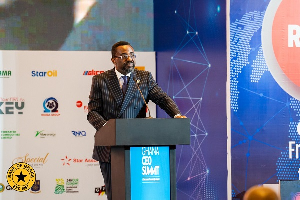
Speaking at the 10th edition of the Ghana CEO Summit held at the Kempinski Hotel Gold Coast City in Accra on Thursday, May 28, 2026, he said Ghana stands at a critical stage where the country must convert its recent economic recovery into sustained industrial growth and inclusive development.
Addressing business leaders, policymakers, and industry players on the theme, “Managing Financial Sector Reforms and Industrial Growth: Driving Ghana’s Economic Transformation from Vision to Action,” Dr Asiama said Ghana’s recovery from global shocks and domestic economic challenges presents an opportunity for deeper reforms and stronger institutional resilience.
“We must move beyond aspiration and translate our national vision into practical action and measurable outcomes that improve livelihoods, strengthen businesses, and restore confidence across the economy,” he stated.
According to him, maintaining low inflation, exchange rate stability, and confidence in economic management remains central to supporting investment and job creation.
“A stable macroeconomic environment gives businesses the confidence to invest, expand, and create jobs. Without confidence in price and exchange rate stability, long-term capital cannot thrive,” he noted.
Dr Asiama said the central bank has responded decisively to recent economic pressures through disciplined monetary policies, which have contributed to declining inflation, improved foreign reserves, and renewed market confidence.
However, he warned that rising geopolitical tensions and global uncertainties continue to pose risks to Ghana’s economic outlook.
“The global environment remains highly uncertain, and this requires us to continue building resilience within the economy,” he said.
ANAS/MA
Business News of Thursday, 28 May 2026
Source: www.ghanaweb.com