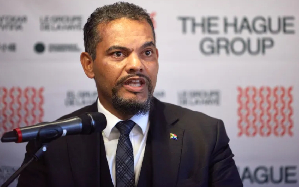
The Bank of Ghana Governor, Dr Johnson Pandit Asiama, has called for deeper integration of Africa’s payment systems, arguing that fragmented cross-border settlement infrastructure remains a major constraint to regional trade and financial market development.
Speaking at the ACI Financial Market Association global conference in Accra, Asiama said African central banks are increasingly prioritising interoperability, digital payments infrastructure and coordinated regulation as financial systems undergo rapid technological transformation.
The Governor said payment and settlement systems across the continent have lagged behind broader trade integration efforts, resulting in high transaction costs and inefficiencies when moving funds within Africa.
“Someone says it is cheaper, for example, to send money across the ocean than it is to send money to another country within the sub-region,” Dr Asiama said. “And so, yes, we have a lot of work to do to support our people.”
He said the Bank of Ghana is supporting several regional initiatives aimed at improving cross-border transactions, including work linked to the Pan-African Payment and Settlement System (PAPSS). The central bank is also exploring how stablecoin-related innovations could help address payment bottlenecks across the sub-region.
According to Dr Asiama, the central bank is working with regional institutions to establish sandbox environments that will allow regulators and innovators to test emerging payment technologies under controlled conditions before wider deployment.
“We do realise that integrating payment systems across the sub-region is the right way to go,” he said.
The remarks come as African policymakers intensify efforts to operationalise the African Continental Free Trade Area through faster and cheaper settlement systems capable of supporting growing intra-African commerce. Despite advances in digital finance, cross-border transfers within Africa remain among the most expensive globally, according to several industry studies.
Dr Asiama said the role of central banks is evolving beyond traditional monetary policy functions into areas including artificial intelligence, data governance, fintech supervision and cybersecurity.
The BoG has already established new internal departments focused on artificial intelligence, data analytics and virtual asset oversight, he said, adding that the institution is considering a dedicated regulatory framework specifically for fintech supervision.
“We were quite late when it comes to fintech,” Dr Asiama said, reflecting on Ghana’s earlier regulatory gaps in digital payments. He noted that the central bank established a dedicated payments systems department in 2016 after recognising that innovation in the market had moved ahead of regulation.
The Governor said policymakers must strike a balance between encouraging innovation and maintaining financial stability, arguing that regulators should focus on managing risks rather than restricting technologies themselves.
“For us in Ghana, that is one approach we’ve been adopting – do not regulate the technology, but regulate the risk,” he said.
Beyond interoperability, Asiama emphasised the need for stronger digital public infrastructure, broader financial inclusion and enhanced cybersecurity resilience across African financial systems.
He said some regions in Ghana still have only a handful of bank branches, making digital finance critical for expanding access to financial services.
Governor Asiama also stressed the importance of maintaining institutional credibility and trust as financial systems digitise.
He said the central bank has increased consultations with financial institutions, investors and market operators to improve coordination and policy effectiveness.
Business News of Thursday, 28 May 2026
Source: thebftonline.com
BoG pushes African payment integration to boost regional trade
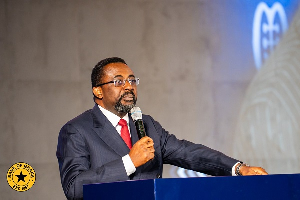 Dr Johnson Asiama, Bank of Ghana Governor




Entertainment