The Member of Parliament for Ekumfi, Dr Othniel Ekow Kwainoe, has responded to a petition submitted to the International Monetary Fund (IMF) by former Finance Minister Dr Mohammed Amin Adam concerning the 2025 audited financial statements of the Bank of Ghana (BoG), describing the concerns raised as “selective” and lacking key fiscal context.
The letter, addressed to the IMF Mission Chief overseeing Ghana’s Extended Credit Facility (ECF) programme, seeks to “set the record straight” on the central bank’s financial position and Ghana’s broader macroeconomic stabilisation path.
Kwainoe argued that Dr Amin Adam’s petition failed to acknowledge what he described as “significant fiscal deviations in 2024, which he attributed to the previous administration’s management of public finances.”
He claimed that Ghana entered 2025 with a fiscal deviation of about 3.1% of GDP, estimated at more than GH¢36 billion in overspending, arguing that this excess liquidity contributed to inflationary pressures and forced the BoG to undertake costly monetary sterilisation measures.
10-year jail term - COCOBOD proposes tough penalties for cocoa smuggling
According to him, the costs reflected in the 2025 BoG accounts were therefore not evidence of mismanagement but the “unavoidable cost of correcting earlier fiscal excesses.”
Kwainoe defended the Bank of Ghana’s interventions, saying they contributed to significant macroeconomic improvements in 2025 and early 2026.
He cited the following outcomes, Reserve money growth decline from 104.5% to 2.6%, inflation reduction from 23.8% to 5.4%, and further to 3.2% by March 2026, 40% appreciation of the cedi, public debt reduction from 61.8% to 45.3% of GDP, foreign reserves increasing to $13.8 billion and estimated import-cost savings of over GHS60 billion
He described these indicators as evidence of “one of the fastest stabilisation processes in recent history,” crediting the central bank’s policy stance.
A central point of contention is the BoG’s reported negative equity position.
Kwainoe dismissed concerns raised in the petition, arguing that negative equity in central banking is an accounting outcome of monetary tightening cycles rather than a sign of insolvency.
He cited examples of other central banks, including the Federal Reserve and the European Central Bank, which have also recorded negative equity positions without operational disruption.
He further addressed concerns over a GH¢29.1 billion foreign exchange revaluation charge, arguing that it was a non-cash accounting adjustment linked to cedi appreciation, and not an actual financial loss.
According to him, similar accounting gains were recorded in 2024 when the currency depreciated, and should be interpreted consistently.
Kwainoe also defended Ghana’s Domestic Gold Purchase Programme, stating that it helped increase reserves from $9.1 billion to $13.8 billion and expanded national gold holdings to 111 tonnes.
He argued that the programme played a significant role in strengthening the cedi and improving external buffers, countering claims that it poses fiscal risks.
The MP urged the IMF to consider what he described as the full sequence of events linking fiscal policy to monetary outcomes, warning against selective interpretation of technical accounting data.
He maintained that Ghana’s recovery trajectory was the result of coordinated fiscal and monetary adjustments, and not evidence of financial deterioration.
Kwainoe concluded that the country’s economic gains must be protected through continued discipline and policy coordination, stressing that “the durability of Ghana’s recovery will depend on sustained fiscal and monetary discipline, not political reinterpretation of accounting outcomes.”
The exchange comes amid ongoing scrutiny of Ghana’s economic management under its IMF-supported ECF programme, with debate intensifying over the interpretation of central bank financial statements and the sustainability of recent macroeconomic gains.
AM
Business News of Wednesday, 27 May 2026
Source: www.ghanaweb.com
Ekumfi MP responds to Dr Amin Adam over IMF petition on BoG 2025 accounts
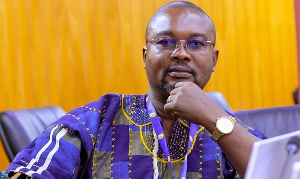 Member of Parliament for Ekumfi, Dr Othniel Ekow Kwainoe