The Bank of Ghana (BoG) has directed Mobile Money Fintech Limited (MMFL) to suspend the implementation of its proposed 0.75 percent fee on direct wallet-to-bank transfers pending further stakeholder consultations.
The proposed charge, which was scheduled to take effect on June 1, 2026, sparked concerns among sections of the public and mobile money users following reports of additional costs associated with digital transactions.
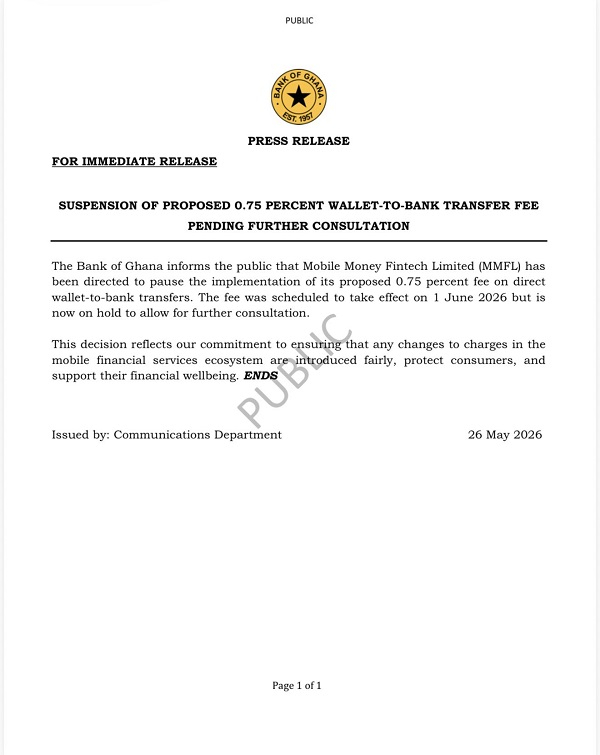
In a press release issued on Tuesday, May 26, 2026, the central bank stated that the decision to halt the implementation forms part of efforts to ensure fairness within Ghana’s growing mobile financial services ecosystem while protecting consumers.
“The Bank of Ghana informs the public that Mobile Money Fintech Limited (MMFL) has been directed to pause the implementation of its proposed 0.75 percent fee on direct wallet-to-bank transfers,” portions of the statement said.
According to the Bank of Ghana, the suspension will allow room for broader consultations on the proposed fee and its potential impact on users and financial inclusion across the country.
GN Savings and Loans could reopen before December 2026 - Dr Nduom
“The fee was scheduled to take effect on June 1, 2026, but is now on hold to allow for further consultation,” the statement added.
The central bank further stressed its commitment to ensuring that any adjustments to charges within the digital finance space are introduced in a transparent and consumer-friendly manner.
“This decision reflects our commitment to ensuring that any changes to charges in the mobile financial services ecosystem are introduced fairly, protect consumers, and support their financial wellbeing,” the statement noted.
The proposed 0.75 percent charge was expected to apply to direct transfers from mobile money wallets to bank accounts, a service that has become increasingly popular in Ghana due to the rapid growth of digital payments and financial technology platforms.
The growth of mobile money interoperability has also strengthened transactions between wallets and bank accounts, improving financial inclusion nationwide.
However, concerns have often emerged over transaction-related charges within the digital payments space, particularly after the introduction and subsequent review of the Electronic Transfer Levy (E-Levy), which generated widespread public debate over the cost of electronic transactions in the country.
Policymakers believe the latest suspension by the Bank of Ghana could pave the way for broader stakeholder engagement to assess the possible impact of the proposed fee on consumers and the digital finance ecosystem.
ANAS/MA
'It was extremely traumatic for Ghanaians to go through the crisis in 2022' - IMF
Business News of Tuesday, 26 May 2026
Source: www.ghanaweb.com
Bank of Ghana suspends new mobile money transfer charge
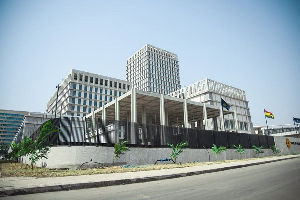 The Bank of Ghana headquarters




Entertainment