Ahead of the Global Sustainability Symposium scheduled for June 9 in Accra, discussions on global supply chains are expected to place greater emphasis on resilience, traceability, and the practical challenges faced by producers in commodity markets.
The decision by the International Social and Environmental Accreditation and Labelling Alliance (ISEAL Alliance) to host the symposium in Accra reflects Ghana’s position in key debates on climate resilience, deforestation, traceability, and market access within global supply chains.
According to ISEAL Executive Director Karin Kreider, resilience should be understood in practical terms rather than as a theoretical concept, given the pressures producers face, including climate variability, price fluctuations, and changing market requirements.
She noted that addressing these challenges requires closer alignment between policy frameworks, market systems, and sustainability standards.
ISEAL is a membership organisation made up of sustainability standard systems such as Fairtrade International, Rainforest Alliance, and the Marine Stewardship Council, among others.
It works to define and strengthen practices for credible sustainability systems and engages in research, policy analysis, and collaboration across supply chains.
While certification schemes and regulatory compliance have shaped sustainability practices in global trade, stakeholders note that these approaches alone do not fully address structural risks affecting producers.
A broader focus on resilience is increasingly being discussed, including long-term adaptation and risk reduction in production systems.
One example shaping current discussions is the European Union Deforestation Regulation (EUDR), which will apply fully to large operators by December 2026.
In Ghana’s cocoa sector, the policy is being viewed both as a compliance challenge and an opportunity to strengthen traceability systems.
The Ghana Cocoa Board (COCOBOD) has developed a cocoa traceability system that assigns digital identification to cocoa bags, linking them to their farms of origin.
It is among the more advanced national-level systems in West Africa aimed at meeting traceability requirements.
However, concerns remain that such regulations may also increase administrative and compliance burdens for producers already affected by climate and market pressures.
ISEAL argues that improving resilience requires not only compliance mechanisms but also broader support systems, including access to training, finance, and markets, as well as stronger coordination between governments, businesses, and sustainability initiatives.
The Global Sustainability Symposium on June 9 in Accra is expected to bring together producers, policymakers, businesses, and sustainability organisations to discuss these issues and the future of global supply chains.
Business News of Tuesday, 26 May 2026
Source: George Owusu, Contributor
Ghana to host landmark global supply chain summit as EU deforestation deadline looms
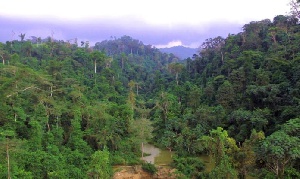 File photo of the Atiwa Forest Reserve