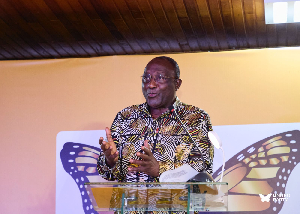
Technical Advisor at the Finance Ministry, Theo Acheampong, has raised concerns over what he describes as Ghana’s poor urban planning system following the latest flooding incidents in Accra.
His comments come after several parts of the capital were submerged following a heavy downpour that lasted only a few minutes, once again exposing the city’s drainage and sanitation challenges.
According to his Facebook post on Friday, 22 May, 2026, he lamented what he believes is the country’s failure to properly plan its urban spaces, arguing that other African cities have made far greater progress than Accra.
“The whole city is just one big slum. Very few developed areas like Ridge, Labone, Roman Ridge, Airport Enclave, Cantonments and parts of Osu have proper drainage, decent streets, sanitation and walkways,” he stated.
He further stressed that Ghana has collectively failed in urban planning over the years.
“We’ve collectively failed at urban planning big time. Addis Ababa, Nairobi, Dakar, Abidjan and Windhoek put Accra to shame. We cannot be living and building anyhow. Chaos must give way to order,” he added.
The recent floods disrupted movement in several communities across Accra and left many residents stranded, reviving public debate over the government’s handling of the perennial flooding problem.
Flooding in Accra has become an annual occurrence, especially during the rainy season, with many residents complaining that little progress has been made despite repeated assurances from authorities.
Although agencies such as the National Disaster Management Organisation (NADMO) often provide relief support after such incidents, critics argue that long-term solutions to the flooding menace remain largely unaddressed.
ANAS/EB
BoG holds policy rate at 14.0% as Middle East tensions pose inflation risks
Business News of Saturday, 23 May 2026
Source: www.ghanaweb.com
Theo Acheampong speaks on Accra's urban planning after floods
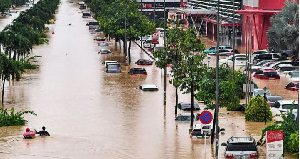 Flood submerged some parts of Accra after rainfall