Assemblyman for the Odododiodoo Constituency, Festus Nii Ayi Hayford, has warned that local authorities are bearing the growing burden of Ghana’s used clothing waste crisis without the infrastructure needed to manage it effectively.
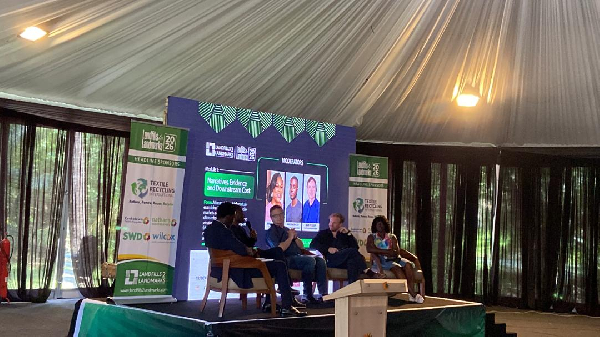
Speaking during the “Landfills 2 Landmarks” summit webinar held on May 18-22, 2026, on regulating the imported used clothing economy, Hayford described local government assemblies as being “at the receiving end” of a fragmented waste chain driven by the country’s thriving second-hand clothing trade.
The summit, held under the theme “Downstream is where the evidence sits,” examined what happens to textile residues after they leave major markets such as the Kantamanto Market and move into collection systems, drainage networks, landfill sites and public spaces.
Hayford explained that assemblies currently rely on partnerships with private waste management companies to transport waste to landfill sites but acknowledged that Ghana lacks treatment plants capable of processing textile waste at the scale being generated.
He further highlighted the growing challenge posed by residual stock from Kantamanto that fails to sell and is later redistributed to secondary markets across the country.
According to him, once these materials leave the market and disperse through informal channels, they effectively move beyond any traceable system.
“Local government can plan around Kantamanto’s known generation volumes, but once the stock disperses across secondary markets the disposal pathway fragments and ends up in the wrong hands,” he stated.
Drama in court as 'crying' Wontumi reportedly requests for water under cross-examination
The discussion formed part of the second module of the summit series, which sought to trace what happens to unsold second-hand clothing after reuse fails within the market.
Moderators framed the central issue around a key question: when traders open imported bales and portions cannot be sold, where does the waste ultimately end up and who bears the financial cost of removing it?
Executive Secretary of the Environmental Services Providers Association (ESPA), Ama Ofori Antwi, painted a grim picture of the country’s disposal system.
She said textile waste that cannot be resold frequently ends up in landfill sites, drains or is openly burnt, adding that Ghana’s waste management system was designed mainly for municipal solid waste and is already operating at only about 60 per cent collection efficiency.
Ofori Antwi identified the Korle Lagoon as one of the most visible environmental pressure points because of its proximity to Kantamanto.
She explained that textile materials often combine with plastics to choke drainage systems, contributing to flooding and environmental degradation in Accra.
“The Korle Lagoon restoration project exists partly because of these pressures,” she noted.
General Manager of Integrated Recycling and Compost Plant (IRECOP), Betty Brown Nyadu, confirmed that some textile waste does reach formal recycling facilities.
She disclosed that records from her recycling plant over a seven-year period showed textiles accounted for an average of 22 per cent of incoming waste by mass.
Despite this, she stressed that Ghana still lacks dedicated national infrastructure capable of handling the large volumes of textile waste entering the country through imported used clothing.
Ofori Antwi also raised questions about whether revenues generated from used clothing imports are being reinvested into waste management systems.
She proposed the establishment of textile-specific sorting facilities across municipalities, similar to emerging systems being developed for plastics management.
Lavinia Fernandes challenged widely circulated claims that 40 per cent of imported used clothing becomes waste in Ghana.
According to her, the figure could reportedly be traced to a single interview conducted with one trader by a researcher affiliated with The Or Foundation who had not visited Ghana at the time.
The Chairman of the Used Clothing Dealers Association also questioned the validity of the estimate, arguing that importers would not knowingly invest in stock if nearly half of it was destined for landfill.
AM
Nigeria's Nnamdi Onwaez thrilled after reaching 110m hurdles final
Esther Obenewaa targets Commonwealth Games gold medal glory
Business News of Friday, 22 May 2026
Source: www.ghanaweb.com
We are at the receiving end of the chain - Assemblyman raises alarm over textile waste crisis
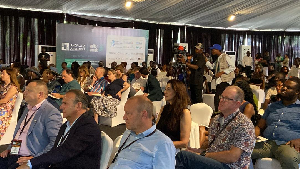 Some of the stakeholders during the programme