The African Export-Import Bank (Afreximbank) has declared that Africa’s next phase of economic growth must be driven by intra-African trade, industrialisation, and greater economic sovereignty, as preparations intensify for the 2026 Afreximbank Annual Meetings (AAM2026) in Cairo, Egypt.
The position was outlined on during a high-level media briefing hosted at the Central Bank of Egypt Auditorium by the Governor of the Central Bank of Egypt, Hassan Abdalla, and Afreximbank President and Chairman of the Board of Directors, Dr George Elombi.
Addressing journalists and stakeholders, Afreximbank officials said the central theme of AAM2026 would focus on “Intra-African Trade as a Catalyst for Industrialisation and Economic Sovereignty,” reflecting the continent’s growing determination to strengthen regional integration and reduce dependence on external systems.
According to the bank, Africa has spent the last decade laying institutional foundations for economic integration through initiatives such as the African Continental Free Trade Area (AfCFTA), the Pan-African Payment and Settlement System (PAPSS), the AfCFTA Adjustment Fund, the African Collaborative Transit Guarantee Scheme, and the Intra-African Trade Fair.
Officials stressed that the continent must now move beyond frameworks and focus on transforming these structures into real industrial production capacity, value addition, resilient supply chains, and bankable investment projects.
“The task now is to convert those platforms into production capacity, value addition, resilient supply chains, and investible projects,” the briefing statement emphasised.
Afreximbank also highlighted its financial performance and resilience since the last Annual Meetings, disclosing that the Group closed the first quarter of 2026 with total assets and contingencies amounting to US$49.4 billion and shareholders’ funds of US$8.6 billion.
The bank reported a capital adequacy ratio of 23 percent and a non-performing loan (NPL) ratio of 2.40 percent, underscoring continued investor confidence and institutional stability.
Officials further revealed that Afreximbank successfully concluded a US$2 billion syndicated facility during the first quarter of 2026 and launched a US$10 billion Gulf Crisis Response Programme aimed at assisting African countries facing supply chain disruptions, liquidity constraints, and payment pressures linked to global geopolitical tensions.
Investor confidence, the bank noted, remains strong as Afreximbank secured financing through Samurai and Panda bonds while attracting 31 lenders from Europe, Asia, the Middle East, and Africa under its dual-tranche syndicated facility.
“The central achievement is that Afreximbank has continued to move from financing transactions to building systems,” the statement said, adding that “payment systems, digital verification platforms, trade corridors, industrial capacity, and Global Africa partnerships form the basis for long-term economic sovereignty.”
Preparations for AAM2026, according to officials, are now at an advanced stage, with Afreximbank working closely with the Government of Egypt and other partners to ensure a successful and secure gathering.
The bank explained that host-country selection for the Annual Meetings is based on factors including strategic relevance to African trade and finance, infrastructure readiness, institutional support, connectivity, security, and the capacity to host high-level international engagements.
Officials noted that Egypt’s hosting of AAM2026 further reinforces its role as a strategic financial hub and a platform for African economic cooperation.
The meetings are expected to attract more than 4,000 delegates from across Africa and the wider Global Africa community, including heads of state, policymakers, financial institutions, private sector leaders, development partners, academics, and international investors.
The agenda will focus on three major pillars: strengthening intra-African trade as a pathway to economic independence in an increasingly polarised global environment; accelerating industrialisation and value addition; and mobilising African and international capital for sustainable development.
Afreximbank emphasised that the core policy challenge facing Africa is how to use regional markets and the AfCFTA framework to build domestic industrial capacity, reduce external dependency, and retain more value from Africa’s natural resources.
The bank also outlined several flagship interventions that already demonstrate this approach, including support for the Dangote Refinery, the Beitbridge Border Post upgrade, and the US$250 million Afreximbank African Trade Centre project in Egypt.
For AAM2026, officials said the focus will remain on projects supporting transport and logistics corridors, energy systems, manufacturing platforms, digital trade infrastructure, and financial services aimed at reducing transaction barriers across Africa.
Addressing growing geopolitical uncertainty, Afreximbank maintained that recent global shocks have reinforced the urgency for Africa to strengthen regional supply chains and reduce overreliance on external systems for critical goods, payments, logistics, and energy supplies.
“In the immediate term, the bank has launched the US$10 billion Gulf Crisis Response Programme to support liquidity, stabilise trade and payments, and address supply-side disruptions,” officials explained.
The bank added that, structurally, it continues to support implementation of the AfCFTA, PAPSS, industrial value chains, trade corridors, and financial systems that enable African countries to trade and settle more transactions within the continent.
Over the next 12 to 24 months, Afreximbank identified trade finance, energy security, manufacturing, transport and logistics infrastructure, health systems, digital payments, strategic minerals processing, and financial services as priority sectors for financing.
The bank also reiterated its support for the establishment of an African Credit Rating Agency aimed at promoting more balanced and context-sensitive assessments of African economies and institutions.
“The objective is not to reject global capital markets or international investors,” officials clarified, “but to ensure that African economies and institutions are assessed with appropriate context, reliable data, and a clear understanding of African operating models.”
Afreximbank further stressed that Africa needs stronger institutions capable of deepening financial sovereignty, strengthening investor confidence, and reducing the cost of perceived risk associated with African markets.
The briefing concluded with discussions on strengthening Afreximbank partnerships within the Central African Economic and Monetary Community (CEMAC) region through collaboration with central banks, commercial banks, and regional institutions to improve financing access for the private sector across Africa.
Business News of Friday, 22 May 2026
Source: www.ghanaweb.com
Intra-African trade must drive next phase of economic growth – Afreximbank
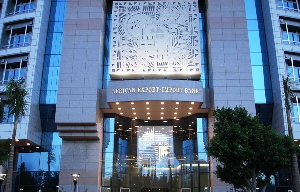 The African Export-Import Bank (Afreximbank)