The Minister of Energy and Green Transition, Dr John Abdulai Jinapor, has unveiled the government’s plan to deploy more than 1,000 megawatts of emergency power to bridge Ghana’s long-standing energy deficit.
According to Jinapor, the time has come for Africans to take charge in resolving their own challenges, creating space for local participation and homegrown solutions.
Addressing participants at the opening of the 2026 Africa Energy Technology Conference in Accra on May 19, Dr John Jinapor warned that energy poverty continues to remain a major threat to Africa’s growth.
"Africa’s energy deficits continue to persist and create serious constraints for economic transformation. Approximately 600 million Africans lack access to electricity. Even more importantly, more than 80% of our rural folks do not have access to electricity.
"About a billion Africans do not have access to clean cooking. That is serious. And that is something that challenges, and that is something that you expect to work together. And like I always say, I know that if we work together, we will surely make it as a continent,” he said.
He urged African economies to scale up generation capacity, stressing that the continent must look inward to achieve self-reliance and dependency.
“Just like other African countries, we must ensure that we scale up our generation capacity and also close the last mile to ensure that everybody in Ghana has access to electricity. The undeniable fact is that when electricity is unreliable or unaffordable, industries struggle. Businesses slow down, investments decline, and opportunities for young people diminish,’’ he stressed.
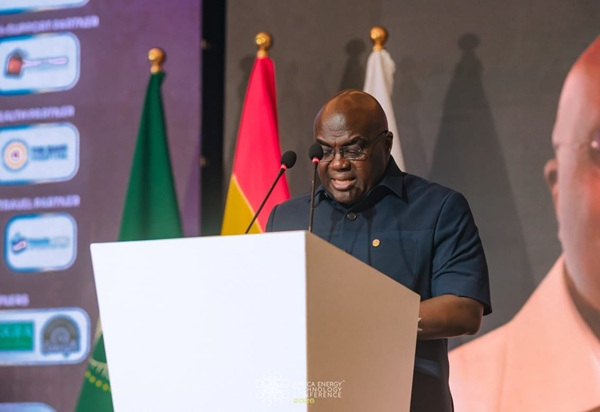
For his part, the Chief of Staff Julius Debrah, who delivered the keynote address on behalf of President Mahama, called for a decisive shift from fragmented energy markets to a more integrated and accelerated framework.
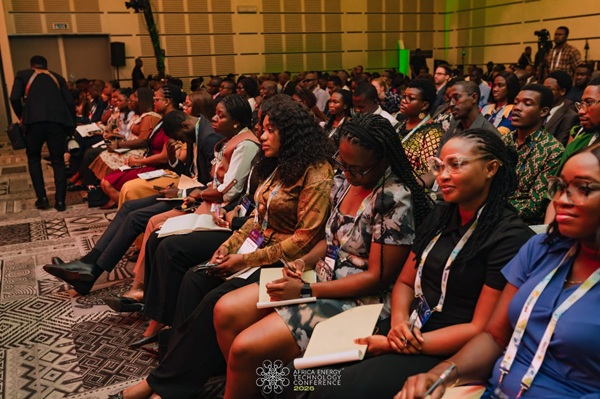
He also charged regional leaders to strengthen energy economic structures that will position Africa as a new growth pole for transformation.
“I am calling the heads of the various regional blocs and the AU to make the energy market work, and I will lead a crusade until energy becomes Africa's most traded commodity, not constrained by borders but enabled by bridges.
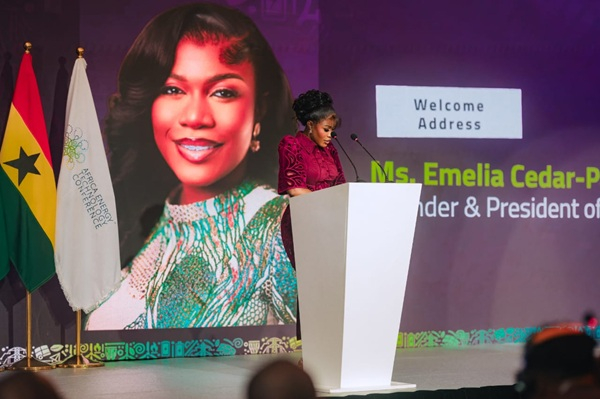
"The pace of our energy economic development and investment is too slow. We must shift to high-speed growth immediately. This is the only way to catch up and position Africa as a true growth pool for the new age,” Debrah announced.
The Secretary-General of the African Petroleum Producers’ Organisation (APPO), Farid Ghezali, pushed for Africa to deepen its quest to move from declaration to implementation to help achieve bankable energy projects on the continent.
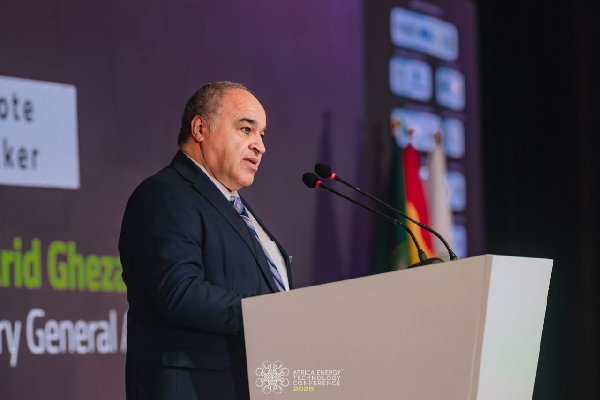
He emphasised that Africa cannot continue to deepen its roots in external funding, calling for the need to bridge the gap to create more jobs and provide easy access to energy on the continent.
“African financing cannot continue to depend exclusively on external financial systems that don't always reflect our development realities. We need instruments capable of supporting oil, gas, infrastructure, local content, industrialization, and a just fair transition in African balance. The energy sector must create more African jobs, more African services, more African technical providers, and more African industrial capacity,” he stated.
The Africa Energy Technology Conference 2026 ends on Thursday, May 21, 2026.
Business News of Wednesday, 20 May 2026
Source: www.ghanaweb.com
Ghana targets energy security with 1,000MW emergency power - John Jinapor
 Dr John Abdulai Jinapor is the Minister of Energy and Green Transition