The price of oil slumped on Monday after US President Donald Trump said he was holding off a military attack on Iran planned for Tuesday at the request of Gulf states.
The global benchmark Brent crude sank from $112 (£83) to $109 after Trump made the comments on Truth Social.
Before the social media post, the price had swung throughout Monday. Trump warned Iran on the weekend that the "clock is ticking", with talks to bring the war to an end apparently stalled.
Energy markets have been on a wild ride after Iran effectively closed the key Strait of Hormuz waterway in retaliation for US and Israeli strikes on the country, which started on 28 February.
Around a fifth of the world's oil and liquefied natural gas usually passes through the narrow shipping route.
The oil market has been reacting swiftly to any signs of progress, or lack of it, towards a peace deal that will reopen the strait.
The rise in crude in early trade on Monday came after Trump wrote on social media that Iran had "better get moving, FAST, or there won't be anything left of them", adding "TIME IS OF THE ESSENCE!"
The president warned last week that the ceasefire was on "massive life support" after rejecting Iran's demands, labelling them "totally unacceptable".
According to news platform Axios, Trump is expected to hold a meeting on Tuesday with his top national security advisers to discuss the options for military action regarding Iran.
However, oil prices fell back later after reports that an Iranian news agency said the US had accepted a temporary waiver on sanctions of Iran's crude oil during the negotiations, raising hopes of progress in peace talks.
Later on Monday, Trump said, "Serious negotiations are now taking place".
In a post on Truth Social, he said he had been asked to hold off a military attack on Iran planned for Tuesday by the leaders of Qatar, Saudi Arabia and the United Arab Emirates.
Trump said he had been informed that a deal would be made that is "very acceptable" to the US, adding that there would be "NO NUCLEAR WEAPONS FOR IRAN!"
But he warned that the US military would be prepared to "go forward with a full, large scale assault of Iran, on a moment's notice" if there was no acceptable deal reached.
Iran has not publicly commented on Trump's latest statement.
Government borrowing costs rise
The rise in energy costs since the conflict began has also pushed up government borrowing costs, as measured by bond yields.
The fear is that higher energy bills will increase inflation leading central banks to hike interest rates.
On Monday, the benchmark 10-year US Treasury yield - effectively the interest rate charged to the US government for a 10-year loan - hit 4.63% at one point, its highest level in more than a year, before falling back.
Yields on Japanese bonds also jumped after Reuters reported the government there was likely to issue fresh debt as part of funding for a planned extra budget to help cushion the economic blow from the war.
The yield on the 30-year Japanese government bond rose to its highest on record at 4.2%, while the 10-year yield jumped to 2.8%, its highest since October 1996.
Yields on eurozone bonds also started the day higher before they fell back as oil prices declined.
The latest moves came as G7 finance ministers met in Paris.
European Central Bank head Christine Lagarde, asked as she arrived if she was worried by a sell-off in global bond markets, replied to reporters: "I always worry, that's my job."
'Summer of pain'
Claudio Galimberti, chief economist at Rystad Energy, told the BBC that the high level of oil prices was "a very dire situation and it's going to get worse unless the strait is opened".
"We are approaching a summer of pain, I am afraid, unless Hormuz is opened."
Higher oil prices have pushed up fuel costs for businesses, including airlines - many of which are entering the peak holiday season.
Irish airline Ryanair reported its full-year results on Monday and said: "The conflict in the Middle East has created economic uncertainty and we still don't know when the Strait of Hormuz will reopen."
The carrier said it had secured contracts to fix the price for 80% of its jet fuel in the months ahead.
But it said the price of the remaining 20% "has spiked due to the Middle East conflict".
Ryanair's profits rose to €2.26bn (£2bn) from €1.6bn last year, with sales up 11% to €15.5bn for the year to the end of March.
But it said the outlook for the business was difficult to predict at the moment due to the Iran war as well as the ongoing conflict in Ukraine.
During the Middle East conflict Iran has launched attacks on neighbouring countries including Israel, Bahrain and the United Arab Emirates (UAE).
On Sunday, the UAE said a drone strike had triggered a fire near its nuclear power station, calling the incident a "dangerous escalation".
Officials are investigating the source of the strike. The country's defence ministry said three drones had entered the UAE from the "western border direction".
While two were intercepted, the third drone struck an electrical generator "outside the inner perimeter" of the Barakah Nuclear Power Plant in Abu Dhabi, sparking a fire.
No injuries were reported and there was no impact on radiological safety levels, local authorities said.
Business News of Monday, 18 May 2026
Source: bbc.com
Oil price slumps as Trump says he called off Iran attacks
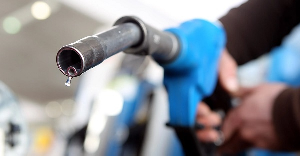 File photo of a fuel pump