Vice President Naana Jane Opoku-Agyemang has called for stronger investment in value addition, sustainability, and regional collaboration in Africa’s shea industry, as the Global Shea Alliance marked its 15th anniversary at the opening of the SHEA 2026 conference in Accra.
Addressing participants, she said the shea sector remains a critical source of livelihoods for millions across Africa, particularly women involved in shea collection and processing.
She noted that the Global Shea Alliance has grown significantly since its establishment in 2011, when it was inaugurated by then-Vice President John Dramani Mahama, expanding from 48 to more than 900 members worldwide.
“In Ghana alone, hundreds of thousands of women are engaged in shea activities, particularly in the northern part of our country,” she said. “Shea trees are part of everyday life, providing food, income, and contributing to exports.”
The Vice President stressed that Africa must move beyond exporting raw shea kernels and instead focus on processing and industrialisation to capture more value.
“Transforming shea kernels into butter and then into ingredients for the food and cosmetics sectors enables our countries to add more value, generate more jobs, and strengthen rural economies,” she stated.
She added that government’s industrialisation agenda and the proposed 24-hour economy initiative are expected to support continuous production, processing, and trade across key sectors, including shea.
“This means moving beyond the export of raw materials towards greater value addition, processing, and industrial development,” she said.
Prof. Opoku-Agyemang also highlighted the environmental importance of shea parklands, describing them as vital ecosystems that support biodiversity, improve soil fertility, and enhance climate resilience across the sub-region.
“Protecting them is not only an economic necessity but also an environmental responsibility,” she added.
She further called for greater economic empowerment for women who dominate the shea value chain.
“Women dominate the value chain from kernel collection to primary processing, but they need to benefit more from their labour and value,” she said. “Addressing this imbalance is essential to improving productivity, raising incomes, and ensuring the sector’s long-term sustainability.”
French Ambassador highlights global support
France’s Ambassador to Ghana, Diarra Dimé-Labille, described shea as more than an export commodity, noting its role in poverty reduction and women’s empowerment across Africa.
She reaffirmed France’s support for Ghana’s shea sector through partnerships with the European Union and development agencies aimed at promoting sustainable production and expanding market opportunities.
She said long-term growth in the industry would depend on strong partnerships, education, sustainable practices, and improved local processing capacity.
Global Shea Alliance outlines future strategy
Managing Director of the Global Shea Alliance, Aaron Adu, said the organisation now has more than 900 members from over 40 countries, with about 780 delegates attending the conference.
He traced the alliance’s journey from its formation in 2010, when 45 founding members signed the original declaration in Accra, to becoming a global advocate for the shea industry.
“We have come a long way. Membership has grown from 45 to over 900 across 40 countries,” he said.
Mr Adu noted that over the past 15 years, the alliance has promoted market access, sustainability, quality standards, and policy advocacy for shea producers across Africa.
He added that the organisation has also strengthened partnerships with international agencies and expanded the use of shea products in food and cosmetics markets across Europe, Asia, and North America.
Looking ahead, he said the alliance is shifting focus toward policy reform, sustainability, market research, and investment promotion.
“We want to develop a new strategy focused on policy, regulatory standards, sustainability impact, market research, and insights,” he said.
The SHEA 2026 conference has brought together delegates from 21 African countries, alongside international development partners, private sector actors, and policymakers, to discuss the future of Africa’s shea industry and pathways for sustainable growth.
Business News of Wednesday, 29 April 2026
Source: gbcghanaonline.com
Ghana pushes value addition as Global Shea Alliance marks 15 years
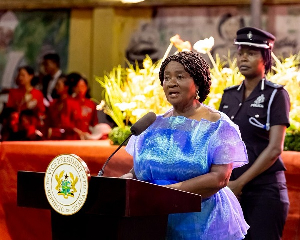 Vice President Naana Jane Opoku-Agyemang spoke at the event




Entertainment