A lawyer and former Member of Parliament for Dormaa East, Paul Apreku Twum-Barimah, has called on the National Petroleum Authority (NPA) to immediately abolish the fuel price floor policy, arguing that it weakens competition and contradicts the core principles of deregulation in Ghana’s downstream petroleum sector.
In a statement on April 24, 2026, Twum-Barimah emphasised that the current policy, which sets a minimum retail price for petroleum products, has effectively restricted Oil Marketing Companies (OMCs) from leveraging their operational efficiencies to offer lower prices to consumers.
He contends that several OMCs possess the capacity to sell petrol and diesel below the prescribed minimum price but are unable to do so due to regulatory constraints imposed by the NPA.
“I know some oil marketing companies who can sell petrol and diesel below the current rate, but because of the floor price set by the NPA, their hands have been tied,” he stated.
Twum-Barimah argued that this limitation has undermined the competitive dynamics expected under a deregulated regime, where market forces, rather than regulatory controls, are meant to determine pricing.
He further noted that recent volatility in global oil markets, driven by geopolitical tensions involving the United States, Israel, and Iran, has created opportunities for some OMCs to source petroleum products through relatively cheaper or more secure supply routes.
However, he maintained that the price floor policy prevents these companies from translating such cost advantages into reduced prices at the pump for consumers.
“The deregulation policy was introduced to promote competition and efficiency in the downstream sector. The introduction of a price floor is effectively a form of price control, which defeats that objective,” he added.
NPA Act set for review to reflect modern Petroleum trends – Tameklo
The intervention by the former legislator comes amid ongoing discussions within the energy sector following the NPA’s introduction of a minimum retail price for petroleum products in April 2024.
At the time, the Authority justified the policy as a necessary measure to address what it described as “unhealthy competition” among OMCs and to ensure stability within the downstream petroleum market.
However, critics, including Twum-Barimah, argue that while the policy may have been intended to stabilise the market, it risks distorting competition and denying consumers the benefits of lower fuel prices that could arise from efficiency and innovation within the sector.
The debate over the fuel price floor continues to generate divergent views among policymakers, industry players and energy analysts, as questions persist over the appropriate balance between regulation and market freedom in Ghana’s petroleum pricing regime.
AM
2026 Ghana Beverages Awards hailed as biggest and best so far - Emma Wenani
Ibrahim Mahama thanks ex-president Akufo-Addo for his role in Damang Mine takeover deal
Business News of Saturday, 25 April 2026
Source: www.ghanaweb.com
Abolish fuel price floor now - Former NPP MP to NPA
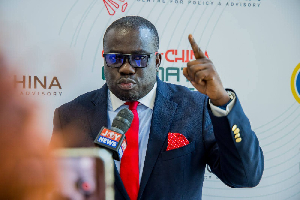 Former Member of Parliament for Dormaa East, Paul Apreku Twum-Barimah



Entertainment