Parliament has passed the Ghana Investment Promotion Authority (GIPA) Bill during the 31st Sitting of the 1st Meeting of the 2nd Session of the 9th Parliament of the 4th Republic, marking a major milestone in the transformation of Ghana’s investment landscape.
The passage of the Bill follows several years of stakeholder engagement and reflects a significant step in efforts to modernise Ghana’s investment promotion framework in line with national development priorities, international obligations, and global standards.
The Bill provides a more modern, flexible, and robust legal framework for investment promotion, facilitation, and regulation in Ghana.
It is expected to strengthen the country’s investment regime, improve responsiveness to investor needs, and support a more transparent and efficient investment environment.
Among its key provisions, the new Bill designates the Authority as the national focal point for the Protocol on Investment under the African Continental Free Trade Area (AfCFTA), reinforcing Ghana’s role as a gateway to regional and continental markets.
The Bill also places a stronger emphasis on promoting inclusive growth by recognising the important role of Ghanaian investors and supporting the registration and scaling up of wholly Ghanaian-owned enterprises through improved access to incentives and facilitation services.
At the same time, it seeks to attract high-quality foreign direct investment that contributes meaningfully to national development.
In addition, the Bill incorporates principles of sustainable development, social inclusion, and environmental responsibility, with the aim of directing investment into projects that create long-term value, support local enterprise development, and promote technology transfer, skills development, and job creation.
Chief Executive Officer of GIPC, Simon Madjie, described the development as a significant turning point in Ghana’s investment story.
“This Bill positions the Authority to respond more effectively to investor needs, promote greater transparency and accountability in investment facilitation, and support the attraction of quality investment into Ghana,” he said.
“By prioritising local participation and sustainability-focused investments, we are positioning Ghana as a competitive destination that grows responsibly and leaves no community behind,” he added.
Madjie, on behalf of the Board and Management of the Centre, expressed appreciation to Parliament, the Committee on Public Administration and State Interests, the Leadership of the Budget Committee, the Committee on Trade, Industry and Tourism, the Ministry of Finance, the Ministry of Trade, Agribusiness and Industry, and all partners whose collaboration contributed to this legislative milestone.
Once assented to by the President, the new law is expected to strengthen the Authority’s role in attracting and facilitating both domestic and foreign investment, improve the ease of doing business through more efficient administrative processes, enhance investor protections, and support clearer dispute resolution mechanisms.
Business News of Saturday, 4 April 2026
Source: www.ghanaweb.com
Parliament passes Ghana Investment Promotion Authority (GIPA) Bill
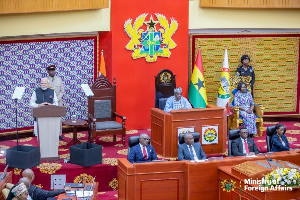 The bill once assented will strengthen GIPC's role in attracting investments